Featured Snippet
Vintage last names like Ashworth, Blackwell, Merriweather, Thatcher, Pemberton, and Kingsley carry a timeless charm rooted in old English, Victorian, and European heritage. Rich with history and character, these surnames work beautifully for baby names, fictional characters, pen names, or family history research.
Some Names Sound Like They Were Built to Last
There is a particular quality to a vintage surname that modern names simply do not have.
It sounds like it was earned rather than chosen. Like it came from somewhere specific a village, a trade, a piece of land that a family worked for generations. Like it has been passed through enough hands to develop its own weight and grain, the way old wood does.
Ashworth. Merriweather. Blackwell. Pemberton.
Say them aloud and feel what happens. They carry geography carry profession. They carry the accumulated dignity of people who lived before us and left their names as the only permanent record that they were here at all.
This guide is for fiction writers who need surnames that feel historically grounded and emotionally resonant. For people researching family history and discovering names worth knowing.
________________________________________________________________________________________________
Vintage Last Names Through History: From the 1500s to the 1700s
Many people searching for vintage last names are actually looking for surnames that were common during a particular historical period. While most traditional family names originated during the Middle Ages, many became firmly established between the 1500s and the 1700s, when hereditary surnames were consistently passed from one generation to the next.
These centuries shaped many of the English, Scottish, Irish, and early American surnames that are still recognized today. Whether you’re researching family history, writing historical fiction, or simply searching for an authentic old-fashioned surname, understanding how names evolved through each era provides valuable context.
Old Last Names from the 1500s
By the 1500s, hereditary surnames had become well established across England and much of Europe. Many families continued using occupational, geographical, and patronymic surnames that had originated centuries earlier, while spelling gradually became more consistent.
Some recognizable last names from the 1500s include:
| Surname | Origin | Meaning |
|---|---|---|
| Smith | English | Metal worker or blacksmith |
| Baker | English | Bread maker |
| Taylor | English | Tailor or clothing maker |
| Cooper | English | Barrel maker |
| Carter | English | Cart driver |
| Fletcher | English | Arrow maker |
| Chapman | English | Merchant or trader |
| Miller | English | Grain mill worker |
These surnames reflected everyday occupations and often identified an individual’s profession within the community. Because trades were commonly passed from parent to child, these family names remained remarkably stable and many survive unchanged today.
Popular Last Names in the 1600s
During the 1600s, surnames became increasingly standardized as parish records, legal documents, and land ownership records expanded across Britain. This period also marked the beginning of large-scale migration to North America, allowing many traditional British surnames to spread across the colonies.
Common surnames associated with the 1600s include:
- Smith
- Johnson
- Williams
- Brown
- Taylor
- Jones
- Walker
- White
- Hall
- Clarke
Many of these names appear frequently in early census records, church registers, and colonial documents because they belonged to large farming, merchant, and artisan families. While they may seem ordinary today, they represent some of the oldest continuously used family names in the English-speaking world.
Last Names from the 1700s
The 1700s introduced greater social mobility, international trade, and migration, but established family surnames remained remarkably consistent. Aristocratic families continued using hereditary estate names, while working families retained occupational and regional surnames that had been passed down for generations.
Well-known surnames from the 1700s include:
- Harrington
- Ashworth
- Fairfax
- Thornton
- Kingsley
- Pemberton
- Whitmore
- Beaumont
- Drummond
- Standish
Many of these names appear throughout historical records, literature, military registers, and early government archives, giving them a lasting association with Britain’s Georgian era and the early years of American history.
How Surnames Changed Between the 1500s and 1700s
Although many vintage surnames remained the same throughout these centuries, their spellings often changed as literacy improved and official record keeping became more standardized.
Several important naming trends emerged during this period:
- Occupational surnames such as Smith, Taylor, and Cooper remained among the most common family names.
- Location-based surnames like Ashworth, Whitfield, and Thornton became increasingly standardized.
- Noble and aristocratic families preserved estate-based surnames across multiple generations.
- Immigration introduced Scottish, Irish, Norman French, and Welsh surnames into new regions.
- Parish records helped establish consistent spellings that are still used today.
These developments explain why many vintage surnames feel both historically authentic and surprisingly familiar to modern readers.
Why These Historical Surnames Still Matter
Whether you’re exploring your ancestry, naming a fictional family, or searching for a timeless surname, names from the 1500s, 1600s, and 1700s offer something modern inventions cannot: centuries of documented history.
They have survived changing languages, migrations, wars, and cultural shifts while preserving their original identity. That enduring legacy is one of the defining characteristics of a truly vintage surname, making these historical family names just as meaningful today as they were hundreds of years ago.
Common and Popular Last Names in the 1800s
The 1800s were a defining century for family names, especially across England, Scotland, Ireland, and the United States. By this time, hereditary surnames had become firmly established, and many of the last names that remain common today were already appearing in census records, birth registers, military documents, and immigration records.
While some surnames reflected noble ancestry, most belonged to farmers, craftsmen, merchants, and laborers whose family names had been passed down for centuries. As people migrated during the Industrial Revolution and settled in new regions, many traditional surnames became even more widespread.
Common Last Names in the 1800s
Many everyday surnames in the 1800s originated from occupations, family relationships, or locations. These names were easy to recognize within local communities and were frequently recorded in official documents.
Some of the most common last names during the 1800s include:
| Surname | Origin | Meaning |
|---|---|---|
| Smith | English | Blacksmith or metal worker |
| Johnson | English | Son of John |
| Williams | Welsh | Son of William |
| Brown | English | Person with brown hair or complexion |
| Jones | Welsh | Son of John |
| Taylor | English | Tailor |
| Miller | English | Grain mill worker |
| Davis | Welsh | Son of David |
| Wilson | Scottish | Son of William |
| Clark | English | Clerk or scholar |
These surnames appeared regularly in parish records, census returns, and immigration documents throughout the nineteenth century and remain among the most recognizable family names today.
Popular Surnames in the 1800s
Alongside common family names, several surnames gained popularity because of influential families, political leaders, authors, military figures, and expanding communities.
Some well-known surnames associated with the 1800s include:
- Harrington
- Kingsley
- Thornton
- Beaumont
- Whitmore
- Pemberton
- Fairfax
- Drummond
- Ashworth
- Holloway
Unlike occupational surnames, many of these names carry a stronger historical, literary, or aristocratic character, making them especially appealing for historical fiction, genealogy, and vintage-inspired naming.
Rare and Uncommon Last Names from the 1800s
Not every nineteenth-century surname became widely used. Some remained tied to specific regions or noble families, while others gradually became uncommon over time.
Examples include:
- Fortescue
- Beauchamp
- Ravenswood
- Merriweather
- Wyndham
- Grimshaw
- Delacroix
- Fitzwilliam
- Blackwood
- Willoughby
These surnames often appear in historical literature, old land records, aristocratic family trees, and regional archives. Today they feel distinctive while still preserving their authentic nineteenth-century heritage.
Why Many 1800s Last Names Are Still Common Today
One reason nineteenth-century surnames continue to survive is that family names became legally and socially standardized during this period. Governments increasingly relied on census records, tax registers, birth certificates, marriage records, and immigration documents, helping preserve consistent surname spellings across generations.
At the same time, large-scale migration from Britain and Europe introduced these surnames to North America, Australia, and other parts of the world. As families settled in new countries, many of these names remained unchanged, allowing them to become familiar across multiple generations.
Because of this history, surnames from the 1800s often feel timeless rather than outdated. Whether you’re researching your ancestry or searching for a vintage surname with lasting appeal, many nineteenth-century family names continue to represent heritage, identity, and tradition.
Popular Last Names in the Early 1900s (1920s–1930s)
The early twentieth century brought significant social and cultural changes, but family surnames remained remarkably stable. During the 1920s and 1930s, many traditional English, Scottish, Irish, Welsh, and European surnames continued to dominate birth records, census reports, school registers, and immigration documents.
Unlike modern naming trends, surnames during this period were almost always inherited through family lineage, making them an important part of personal identity and local history. Many of these family names are still among the most common surnames in English-speaking countries today.
Common Last Names in the 1920s
The 1920s saw little change in the surnames most families carried. Instead, familiar family names continued to be passed down from one generation to the next.
Some of the most common last names in the 1920s include:
| Surname | Origin | Meaning |
|---|---|---|
| Smith | English | Blacksmith or metal worker |
| Johnson | English | Son of John |
| Williams | Welsh | Son of William |
| Brown | English | Brown-haired or dark complexion |
| Jones | Welsh | Son of John |
| Miller | English | Grain mill worker |
| Davis | Welsh | Son of David |
| Wilson | Scottish | Son of William |
| Moore | English | Person living near a moor |
| Clark | English | Clerk or scholar |
These surnames appeared frequently in census records, school enrolments, military documents, and passenger lists throughout the Roaring Twenties.
Popular Surnames in the 1930s
Despite the economic hardships of the Great Depression, family surnames remained largely unchanged during the 1930s. Most people continued using long-established hereditary surnames that had already been common for centuries.
Popular surnames during the 1930s include:
- Smith
- Johnson
- Brown
- Williams
- Taylor
- Anderson
- Thomas
- Walker
- White
- Hall
Many of these names were shared by families across Britain, North America, Australia, and other English-speaking regions, making them some of the most recognizable surnames of the twentieth century.
How Family Names Stayed Consistent During the Early 1900s
Unlike given names, which often changed with fashion and popular culture, surnames rarely followed trends. Because family names were inherited, they remained consistent across generations unless altered through marriage, immigration, or legal name changes.
Government record keeping also became far more accurate during the early twentieth century. National censuses, birth registrations, passports, and military records helped preserve surname spellings, making many historical family names easier to trace through genealogy research today.
Vintage Surnames That Remained Popular Throughout the Early 1900s
Several vintage surnames successfully carried their historical character into the twentieth century without losing their traditional appeal.
Examples include:
- Harrington
- Kingsley
- Ashworth
- Whitmore
- Thornton
- Beaumont
- Pemberton
- Drummond
- Holloway
- Fairfax
These surnames continue to feel elegant and timeless because they combine centuries of history with continued use across multiple generations. They remain excellent choices for historical fiction, family history projects, character names, and anyone looking for classic surnames with lasting heritage.
From Historic Records to Modern Family Names
Many surnames that appeared in the 1920s and 1930s are still among the most recognized family names today. Their survival reflects the enduring nature of hereditary naming traditions, careful historical record keeping, and generations of families who preserved their identities through their surnames.
Whether you’re exploring genealogy, researching family history, or simply searching for authentic vintage surnames, names from the early twentieth century provide an important bridge between historic traditions and modern family identity.
How Vintage Last Names Evolved from the 1500s to the 1970s
Although surname trends changed very little compared to first names, each historical era left its own mark on family naming traditions. Occupational surnames, place-based names, and patronymic family names remained dominant for centuries, while migration and improved record keeping helped preserve many of the surnames still recognized today.
The timeline below highlights how vintage surnames evolved across different historical periods.
| Historical Era | Common Surname Styles | Examples |
|---|---|---|
| 1500s | Occupational and patronymic surnames | Smith, Baker, Cooper, Fletcher |
| 1600s | Parish and regional family names | Johnson, Clarke, Walker, White |
| 1700s | Georgian and aristocratic surnames | Harrington, Pemberton, Fairfax, Ashworth |
| 1800s | Victorian, industrial, and migration-era surnames | Kingsley, Thornton, Whitmore, Holloway |
| 1920s–1930s | Established hereditary family names | Smith, Brown, Williams, Wilson |
| 1940s–1950s | Traditional family surnames remained dominant | Johnson, Davis, Taylor, Miller |
| 1960s–1970s | Historic surnames continued across generations | Anderson, Thomas, Walker, Clark |
Despite changing societies, many surnames remained virtually unchanged for hundreds of years because they were inherited rather than chosen. This continuity is one of the defining characteristics of truly vintage family names.
Vintage Last Names Overview by Aesthetic
| Aesthetic | Example Surnames | Feeling |
| English Manor & Aristocratic | Pemberton, Wyndham, Fairfax, Ashworth | Landed gentry, old money, quiet power |
| Victorian & Literary | Merriweather, Blackwell, Holloway, Kingsley | Dickensian warmth, bookish elegance |
| Gothic & Dark | Blackwood, Grimshaw, Ravenswood, Mordecai | Atmospheric, mysterious, dramatic |
| Soft & Romantic | Whitmore, Rosemont, Fairweather, Ashby | Gentle, pastoral, tender |
| American Frontier | Calhoun, Whitfield, Breckinridge, Hartwell | Pioneer spirit, wide-open spaces |
| Norman French Heritage | Beaumont, Montague, Fitzwilliam, Delacroix | Continental elegance, medieval nobility |
| Celtic & Scottish | MacAllister, Drummond, Strathmore, Galloway | Wild, Highland, ancestral |
| Puritan & Colonial American | Goodwin, Standish, Wentworth, Aldrich | Early American, principled, austere |
English Aristocratic and Manor House Surnames
These are the names that appear on the gate posts of English country houses, in the Domesday Book, and in the family trees of people who have been somewhere specific for a very long time.
Pemberton
An English locational surname meaning “from Pemberton” a place in Lancashire meaning “the farm by the hill with the tree stumps.” Despite its mundane literal origin, Pemberton has accumulated the weight of several centuries of distinguished use and carries an unmistakably aristocratic quality. It is long, confident, and sounds like the name on a library door. In fiction it works for characters of old money, quiet authority, and slightly formal bearing.
Wyndham
From the Old English Wymondham, a place in Norfolk meaning “Wigmund’s homestead.” The Wyndham family were significant figures in English history, and the name carries a specific English literary quality John Wyndham was the author of The Day of the Triffids and The Midwich Cuckoos, giving the surname a science fiction literary dimension in addition to its aristocratic one. As a character surname it is elegant, slightly formal, and works across both historical and contemporary fiction.
Fairfax
From the Old English meaning “beautiful hair” fair (beautiful) and fax (hair). Sir Thomas Fairfax was commander of the New Model Army during the English Civil War a figure of military distinction and personal honor. The name carries that combination of physical elegance and moral seriousness. As a given name used as a surname (increasingly common in the current surname-as-first-name trend), Fairfax is striking and rare.
Ashworth
From the Old English meaning “ash tree enclosure” ash (the tree) and worth (an enclosed settlement). The ash tree was considered sacred in Norse mythology (Yggdrasil, the world tree, was an ash) and deeply significant in English folk tradition. Ashworth sounds like someone who knows the name of every tree in the county and has an opinion about the proper management of woodland. Dignified, nature-rooted, and quietly distinguished.
Harrington
A locational English surname from several places called Harrington, meaning “the settlement of Herebeorht’s people.” The name has been borne by English aristocrats and appears in Spenser’s The Faerie Queene. In contemporary culture, Harrington is the surname of Steve Harrington from Stranger Things which has given it a warm, slightly nostalgic dimension in addition to its traditional weight.
Thornton
From the Old English meaning “settlement by the thorn bushes.” Thornton is both a place name (there are dozens of Thorntons across England) and a personal surname that sounds solid, northern English, and carries a specific quality of principled stubbornness. Charlotte Brontë’s novel Shirley features a character named Robert Moore whose mill is in Briarfield but the name Thornton carries the same Yorkshire industrial dignity. Elizabeth Gaskell’s North and South features John Thornton as its romantic lead one of the great fictional bearers of a vintage surname.
Kingsley
From the Old English meaning “king’s woodland clearing.” The Kingsley family appears throughout English history; Charles Kingsley was the Victorian novelist who wrote The Water-Babies. As a surname it carries both the royal association of “king” and the pastoral quality of “woodland clearing” an unusual combination of authority and naturalism. Currently riding the surname-as-first-name wave.
Victorian and Literary Vintage Surnames
The Victorian era produced some of the most character-rich surnames in English literary history names given to fictional characters by writers of extraordinary imagination who understood that a surname is the first piece of characterization a reader receives.
Merriweather
An English surname meaning “pleasant weather” from the Middle English words merry (pleasant) and weather. It is warm, optimistic, and carries the specific quality of someone who brings good cheer without effort. In Jane Austen’s world, a Merriweather would be the neighbor everyone is pleased to see at a dinner party. In contemporary use, it is rare, beautiful, and carries an irresistible warmth.
Blackwell
From the Old English meaning “dark spring” or “black stream.” There are several places called Blackwell in England. As a surname it carries a slightly Gothic quality balanced by its straightforward English construction. Blackwell’s bookshop in Oxford one of the great independent bookshops in the world has made this name synonymous with a certain kind of cultivated, literary intellectual life.
Holloway
From the Old English holweg, meaning “hollow way” or “sunken road” the old pathways worn deep into English landscape by centuries of foot traffic. Holloway has an almost poetic geographic origin the image of a path that has been worn deeper and deeper by those who walked before you is a beautiful metaphor for inherited character. As a surname it is warm, slightly melancholy, and deeply English.
Whitmore
From the Old English meaning “white moor” or “bright moor.” Whitmore has a lightness that many English surnames lack the white element gives it an open, luminous quality. It sounds like someone who sees the best in difficult landscapes, which makes it excellent for characters of genuine optimism and moral clarity in fiction.
Aldrich
From the Old English Ealdric, meaning “old ruler” or “noble ruler.” Aldrich was a significant surname in colonial New England Senator Nelson Aldrich and his family were major figures in American political history. It carries Puritan-era dignity and a specific kind of principled authority that feels very early American.
Drummond
A Scottish surname from the Gaelic druimean, meaning “little ridge.” The Drummond family were significant in Scottish history the Earls of Perth were Drummonds for centuries. As a surname it carries Highland authority, a specific Scottish ancestral weight, and a sound that is both strong and slightly musical. In contemporary use it functions beautifully as both a surname and a given name.
Lockwood
From the Old English meaning “enclosed wood” or “fenced woodland.” Lockwood is the narrator of Emily Brontë’s Wuthering Heights the observer who frames the entire Gothic drama of Heathcliff and Catherine. This literary association gives it a specific quality of the witness, the chronicler, the person on the edge of extraordinary events. For a fiction writer naming a narrator or peripheral observer character, Lockwood is almost perfect.
Gothic and Atmospheric Vintage Surnames
Gothic literature from Horace Walpole’s The Castle of Otranto through Ann Radcliffe, Matthew Lewis, Bram Stoker, and Daphne du Maurier developed a specific vocabulary of surnames that carry atmosphere as efficiently as setting description.
Blackwood
The most purely atmospheric name on this list. Algernon Blackwood was one of the great writers of supernatural fiction in the early twentieth century H.P. Lovecraft considered him one of the masters of the form. The name combines the darkness of black with the ancient mysticism of woodland. For a Gothic fiction character, Blackwood is almost too perfect but it is perfect enough to use anyway.
Grimshaw
From the Old English meaning “dark copse” or “gloomy thicket.” Grim (dark, fierce) and shaw (a small wood or thicket). Grimshaw carries exactly the atmospheric quality its components suggest there is a darkness to it that is not quite malevolent but is certainly unwelcoming. For a character who lives in or guards a difficult place.
Ravenswood
A Gothic locational surname meaning “ravens’ woodland.” Ravens in Northern European tradition are associated with death, prophecy, and the god Odin. The ravens of Ravenswood are watching, remembering, and knowing things they have not yet decided to reveal. Sir Walter Scott used Ravenswood as the title of one of his novels and as the surname of its doomed protagonist.
Mordrake
This surname carries the structure of medieval Arthurian naming the Mor- prefix (from Celtic mor, meaning “great” or associated with darkness and the sea) combined with the Old English draca (dragon). Whether historically documented as a common surname is uncertain, but its construction follows genuine naming patterns and it carries an unmistakable Gothic authority.
Nightingale
From the Middle English nightingale, the bird famous for its nocturnal song. Florence Nightingale made this surname globally famous and associated it with both devotion and a specific kind of beautiful darkness the care given in night hours, the song that only comes when day retreats. As a Gothic surname it carries the beauty-within-darkness quality that the best Gothic names have.
Dunmore
A Scottish and Irish surname from the Gaelic Dún Mór, meaning “great fort” or “big fortification.” Dunmore sounds like a place that has been defended for centuries a name for someone whose family has always stood their ground. Dark, strong, and carrying a specific highland remoteness.
Soft and Romantic Vintage Surnames
Not all vintage surnames carry weight and shadow. Some carry the specific quality of pastoral England meadows, hedgerows, morning light, and the unhurried beauty of a landscape that has not changed in three hundred years.
| Surname | Origin | Meaning | Feeling |
| Merriweather | Old English | Pleasant weather | Warm, optimistic, charming |
| Rosemont | Old French/English | Rose hill | Romantic, floral, soft |
| Fairweather | Old English | Beautiful weather | Light, pleasant, gentle |
| Ashby | Old Norse/English | Ash tree farm | Nature-rooted, quiet |
| Meadows | Old English | Dweller by the meadow | Pastoral, gentle, open |
| Whitfield | Old English | White field | Clean, bright, open |
| Greenwood | Old English | Green woodland | Fresh, natural, alive |
| Willoughby | Old English | Farm by the willows | Graceful, watery, soft |
| Rosewood | English | Rose wood | Romantic, warm, fragrant |
| Larkspur | English botanical | The flower | Delicate, botanical, rare |
Willoughby deserves particular attention. It appears in Jane Austen’s Sense and Sensibility as the surname of the romantic but ultimately disappointing John Willoughby which gives it both a literary anchor and a specific emotional complexity. As a given name it is currently used (there are notable children named Willoughby), carrying that Austen-adjacent quality that parents drawn to literary naming find irresistible.
Ashby has a particular clean quality the Old Norse ash tree meeting the Old English by (farm or settlement). It sounds like a place that smells of woodsmoke and autumn leaves, and it works beautifully as both a surname and a given name.
American Frontier and Colonial Vintage Surnames
American vintage surnames have a different character from their English counterparts they carry the specific qualities of the frontier, of Puritan New England, of the plantation South, and of the westward movement that defined American history.
Calhoun
From the Irish Cathal, meaning “powerful in battle,” anglicized through Scots-Irish immigration. The Calhoun family produced John C. Calhoun, the South Carolina senator and seventh Vice President. It carries Southern aristocratic weight, a specific Scots-Irish heritage, and the particular gravity of American political history.
Breckinridge
A Scots-Irish American surname from the Scottish Breckenridge, meaning “bracken ridge.” John C. Breckinridge was the youngest Vice President in American history and a Confederate general. The name is long, distinguished, and carries the specific quality of antebellum Southern naming culture formal, slightly theatrical, deeply rooted in a specific time and place.
Wentworth
From the Old English meaning “Wintra’s enclosure” a locational surname from several English places. The Wentworth family was significant in both English and American colonial history. Thomas Wentworth, Earl of Strafford, was one of the most powerful men in early seventeenth-century England. As a name it carries the colonial New England dignity of the Puritan-era governing class.
Standish
The surname of Myles Standish, the Mayflower Pilgrim and military leader of Plymouth Colony one of the defining figures of the American founding myth. Longfellow’s poem The Courtship of Miles Standish made the name famous. It carries a specific Puritan-era courage and integrity that makes it excellent for characters of principle and determination.
Hartwell
From the Old English meaning “stag spring” or “deer stream.” Hartwell has a pastoral American quality it sounds like a family farm in Virginia or a township in New England. Clean, strong, and carrying the wholesome dignity of American rural life without being generic.
Beaumont
Norman French, meaning “beautiful mountain.” The Beaumont family was one of the great Norman aristocratic families in both England and France. In American naming, Beaumont carries a specifically Southern elegance there are Beaumonts across Texas, Louisiana, and Mississippi. It is one of those names that sounds like Sunday afternoon on a veranda.
Norman French and Continental Vintage Surnames
The Norman Conquest of 1066 introduced a wave of French surnames into English culture names that carry a specifically medieval continental elegance that distinguishes them from the more earthbound Anglo-Saxon surnames.
Montague
From the Old French meaning “pointed hill.” The Montague family of Shakespeare’s Romeo and Juliet made this one of the most dramatically charged surnames in English literature. It is long, formal, and carries the specific quality of medieval Italian nobility filtered through Elizabethan English imagination. As a given name it is used (Monty as a nickname is irresistible).
Fitzwilliam
The Fitz- prefix in Norman surnames means “son of” (from the Old French fils, son). Fitzwilliam means “son of William.” Mr. Fitzwilliam Darcy the romantic hero of Jane Austen’s Pride and Prejudice carries this as his first name, which makes it the most romantically charged surname-as-given-name in English literature. For a character in Regency-adjacent fiction, Fitzwilliam is almost too perfect.
Delacroix
French, meaning “of the cross.” The Delacroix family name is associated in France with the Romantic painter Eugène Delacroix, whose dramatic canvases (Liberty Leading the People, The Death of Sardanapalus) define a certain kind of passionate, dramatic visual art. As a surname it carries French elegance, artistic association, and a religious symbolism that adds depth.
Beauchamp
Norman French, meaning “beautiful field.” Pronounced “Beecham” in English one of those names that reveals its continental origin in its spelling while having been thoroughly absorbed into English pronunciation. The Beauchamp family were Earls of Warwick and one of the most powerful noble families in medieval England.
Fortescue
Norman French, meaning “strong shield.” The Fortescue family were significant in English legal history Sir John Fortescue was one of the great medieval English jurists. As a surname it carries medieval legal and martial dignity and a sound that is simultaneously unusual and utterly English.
Vintage Surnames as First Names
One of the strongest current naming trends is using vintage surnames as given names a practice with deep roots in aristocratic and upper-class English naming tradition that has now spread broadly.
| Vintage Surname | As a First Name | Nickname Options | Vibe |
| Kingsley | Kingsley (already used) | King, Kins | Literary, warm |
| Harrington | Harrington | Harry, Harro | Distinguished, friendly |
| Whitmore | Whitmore | Whit, Mori | Clean, elegant |
| Drummond | Drummond | Drum, Mondo | Scottish, strong |
| Ashby | Ashby | Ash | Clean, nature-rooted |
| Willoughby | Willoughby | Will, Wooly | Literary, whimsical |
| Merriweather | Merriweather | Merry, Weatherby | Warm, unusual |
| Pemberton | Pemberton | Penn, Pem | Aristocratic, distinctive |
| Wyndham | Wyndham | Wyn | Literary, elegant |
| Lockwood | Lockwood | Lock, Woody | Gothic-adjacent, strong |
The surname-as-first-name trend is driven by several forces simultaneously: the desire for names that feel distinctive without being invented, the appeal of names with built-in stories and origins, the influence of period drama and literary fiction where surname-as-first-name is common, and the sense that a vintage surname carries a gravitas that purely first-name options sometimes lack.
How to Choose the Right Vintage Last Name
Not every vintage surname creates the same impression. Some evoke old-world elegance, while others feel aristocratic, literary, mysterious, or deeply rooted in family history. Choosing the right surname depends on how you plan to use it—whether for a fictional character, genealogy research, a pen name, or even as a modern first name.
Here are a few simple guidelines to help narrow your choice.
For Elegant and Classy Vintage Names
If you prefer timeless sophistication, consider surnames that have remained popular for centuries without feeling outdated.
Examples:
- Whitmore
- Kingsley
- Beaumont
- Harrington
- Pemberton
These names project refinement, tradition, and quiet confidence.
For Noble or Aristocratic Heritage
Some surnames were historically associated with landowners, influential families, or noble lineages.
Examples:
- Fairfax
- Fortescue
- Fitzwilliam
- Montague
- Beauchamp
These surnames carry strong historical prestige and often appear in British history and classic literature.
For Rare and Distinctive Vintage Surnames
If you’re looking for something less common while maintaining historical authenticity, these names stand out.
Examples:
- Merriweather
- Ravenswood
- Grimshaw
- Wyndham
- Blackwood
They feel memorable without sounding modern or invented.
For Nature-Inspired Vintage Surnames
Many traditional surnames originated from landscapes, trees, rivers, and villages.
Popular examples include:
- Ashworth
- Greenwood
- Whitfield
- Rosemont
- Meadows
- Fairweather
- Rosewood
These names combine natural imagery with centuries of heritage.
For Family History and Genealogy Research
If you’re researching your ancestry, prioritize surnames with well-documented historical records. Occupational, locational, and patronymic surnames often provide valuable clues about a family’s origins, profession, or place of residence. Comparing census records, parish registers, immigration documents, and historical archives can help trace how a surname evolved over time.
Quick Guide to Vintage Last Name Styles
| If You Want… | Consider These Vintage Surnames |
|---|---|
| Elegant & Classy | Whitmore, Beaumont, Kingsley |
| Aristocratic | Fairfax, Fitzwilliam, Fortescue |
| Literary | Lockwood, Merriweather, Thornton |
| Gothic | Blackwood, Ravenswood, Grimshaw |
| Romantic | Rosemont, Fairweather, Willoughby |
| Nature-Inspired | Ashworth, Greenwood, Whitfield |
| American Heritage | Standish, Hartwell, Calhoun |
| Scottish Heritage | Drummond, MacAllister, Strathmore |
| French Heritage | Beaumont, Delacroix, Beauchamp |
Expert Tip
The best vintage surnames are more than simply old—they have enduring historical roots, meaningful origins, and a proven record of use across generations. When choosing a surname, focus on authenticity rather than rarity alone. A well-documented family name with genuine historical significance will always feel more timeless than one chosen solely because it sounds unusual.
Vintage Surnames for Fiction and Worldbuilding
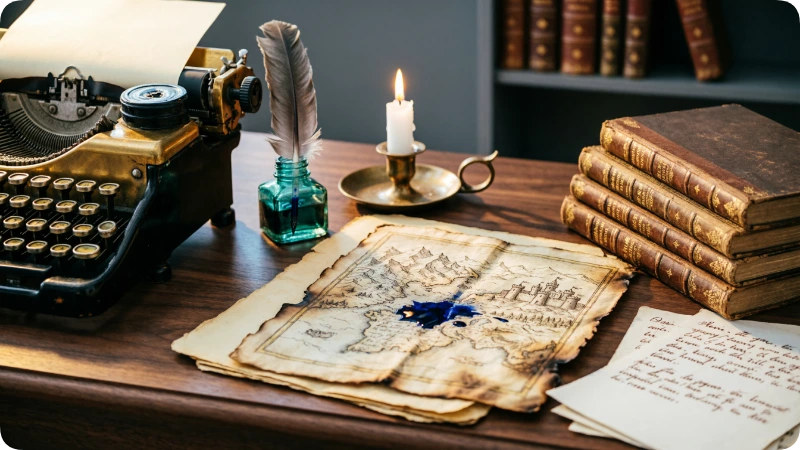
For fiction writers, vintage surnames do something that invented names cannot: they carry an immediate sense of authenticity, of a person who comes from somewhere real and has a history before the story begins.
Historical Fiction (Victorian and Regency)
- Blackwell, Merriweather, Thornton, Holloway domestic, professional, England-rooted
- Wyndham, Pemberton, Harrington, Fairfax aristocratic, landed, formal
- Lockwood, Nightingale, Aldrich, Drummond slightly Gothic, principled, distinguished
American Historical Fiction
- Calhoun, Breckinridge, Standish, Wentworth Southern or colonial, deeply rooted
- Hartwell, Ashworth, Whitfield, Goodwin frontier dignity, principled
- Beaumont, Delacroix, Montague Southern French-heritage elegance
Gothic and Dark Fiction
- Blackwood, Grimshaw, Ravenswood, Dunmore atmosphere-dense
- Mordecai, Nightingale, Lockwood, Ashwood literary Gothic tradition
- Wraithmoor, Coldwell, Duskmore, Gravely for darker, invented-adjacent territory
Fantasy Set in Historical Analogue Worlds
- Fortescue, Beauchamp, Fitzwilliam Norman medieval
- MacAllister, Drummond, Strathmore Scottish Highland
- Pemberton, Ashworth, Wyndham English manor
- Delacroix, Beaumont, Montague Continental noble
FAQs: Vintage Last Names
What are the most beautiful vintage last names?
Merriweather, Pemberton, Wyndham, Fairfax, Willoughby, Blackwood, Drummond, Montague, and Whitmore are among the most aesthetically beautiful vintage surnames. Each carries both phonetic elegance and deep historical roots.
What makes a last name “vintage”?
A vintage surname typically dates from before the twentieth century in common use, has an occupational, locational, or descriptive origin, carries a specific historical register (English manor, Victorian professional, American colonial), and has accumulated cultural weight through historical use, literary association, or regional identity.
Can vintage last names be used as first names?
Yes using vintage surnames as first names is a well-established naming tradition with deep English aristocratic roots and a strong contemporary revival. Names like Kingsley, Harrington, Ashby, Drummond, and Willoughby all work beautifully as given names with plenty of nickname options.
What are good vintage last names for fiction characters?
For Victorian fiction: Merriweather, Blackwell, Thornton, Lockwood. Gothic fiction: Blackwood, Grimshaw, Ravenswood, Nightingale. American historical fiction: Calhoun, Standish, Wentworth, Hartwell. For aristocratic characters: Pemberton, Wyndham, Fairfax, Montague.
What are rare vintage last names?
Fortescue, Beauchamp, Grimshaw, Dunmore, Willoughby, Ravenswood, Merriweather, and Wyndham are all genuinely rare in current use while carrying deep historical and aesthetic depth. These names feel discovered rather than chosen.
What vintage last names have literary associations?
Lockwood (Wuthering Heights), Montague (Romeo and Juliet), Willoughby (Sense and Sensibility), Thornton (North and South), Harrington (Stranger Things contemporary), Blackwood (Algernon Blackwood, supernatural fiction), and Fitzwilliam (Pride and Prejudice) all carry specific literary anchors.
What are vintage rich last names?
Vintage rich last names are surnames historically associated with aristocracy, land ownership, wealth, or influential families. Examples include Pemberton, Fairfax, Beaumont, Fitzwilliam, Montague, Wentworth, Harrington, and Fortescue. These names often evoke old money, social prestige, and historical influence.
What is a classy vintage name?
A classy vintage surname combines historical depth with elegance and strong phonetic appeal. Some of the most sophisticated examples include Wyndham, Merriweather, Whitmore, Drummond, Kingsley, Montague, Beaumont, and Willoughby. These names feel timeless rather than trendy.
What were the most common last names in the 1940s?
During the 1940s, traditional hereditary surnames remained the most common across English-speaking countries. Names such as Smith, Johnson, Williams, Brown, Davis, Taylor, Miller, Wilson, Clark, and White appeared frequently in census records, military documents, and civil registrations. Most of these surnames had already been in use for centuries and continued to dominate throughout the decade.
What were the most popular last names in the 1950s?
The 1950s saw very little change in surname popularity because family names were inherited rather than influenced by fashion. Well-established surnames such as Smith, Johnson, Brown, Williams, Miller, Davis, Wilson, Anderson, Thomas, and Walker remained among the most recognizable family names of the decade.
Which surnames were common during the 1960s?
Throughout the 1960s, many classic English, Scottish, Irish, and Welsh surnames continued to be widely used. Family names including Smith, Johnson, Taylor, Anderson, White, Clark, Thomas, Hall, Walker, and Wilson remained common because they had already been passed down through multiple generations.
What were the most popular last names in the 1970s?
By the 1970s, surname trends remained remarkably stable. Traditional family names such as Smith, Johnson, Brown, Williams, Miller, Anderson, Taylor, Walker, Thomas, and Jones were still among the most familiar surnames across English-speaking countries. Many continue to rank among the most common last names today.
Why do many vintage surnames remain common today?
Unlike first names, surnames are usually inherited and change very little over time. As a result, many family names first recorded centuries ago are still widely used today. Historical records, migration, and consistent family traditions helped preserve these surnames across generations, allowing them to retain both their historical significance and modern familiarity.
What is the difference between a vintage surname and a historical surname?
A historical surname refers to any family name with documented historical use, while a vintage surname typically combines historical authenticity with timeless style and continued appeal. Most vintage surnames are historical, but not every historical surname is considered vintage in modern naming.
Are vintage last names still used today?
Yes. Many vintage surnames such as Smith, Johnson, Kingsley, Harrington, Whitmore, and Ashworth continue to be used across English-speaking countries. Their long history and consistent use make them feel both traditional and timeless.
Can vintage surnames be used for baby names?
Absolutely. Many traditional surnames, including Kingsley, Ashby, Drummond, Beaumont, and Harrington, have become popular as first names while retaining their historic character.
The Names That Survived
A vintage surname has done something remarkable simply by persisting.
It was formed when English was a different language, in places that were forest and farmland, by people who had never heard of electricity or democracy or the internet. traveled through parish records and census documents and ship manifests and gravestone carvings.
It was carried by people who plowed fields and kept shops and built houses and wrote books and fought wars and raised children who raised children who eventually through some improbable chain of events passed it forward to the present.
That survival is not accidental. Names that lasted this long lasted because they carried something worth carrying: a sense of place, a quality of character, a sound that people found worth repeating.
If you’re researching your ancestry, choosing a memorable surname for a fictional character, or simply appreciating the history behind classic family names, vintage surnames offer a unique connection to the past.
Their meanings, origins, and enduring appeal continue to make them some of the most timeless surnames still recognized today.
When you choose a vintage surname for a character, a pen name, a child, or simply to know and appreciate you are reaching into that chain and pulling out a thread of human continuity.
That thread is worth holding.

I am Clara Bennett, a passionate Name Researcher and Content Writer at Nameopediahub.com . I share well-researched content about name meanings, origins, trends, and naming ideas to help readers discover unique and meaningful names from around the world. nameopediahub.com