Featured Snippet
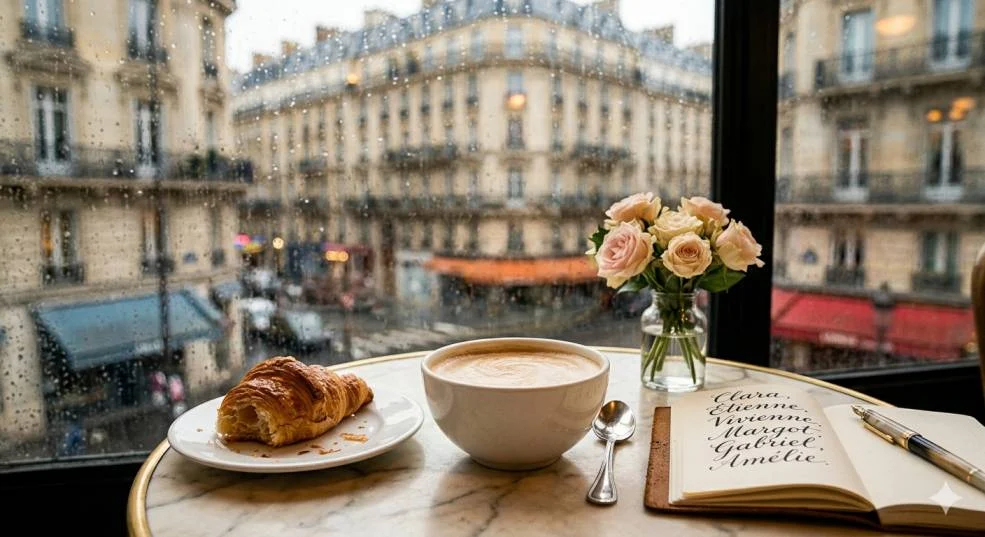
The most elegant fancy French names include Élodie, Séraphine, Marguerite, Théodore, Aurélien, Vivienne, Florentine, Thibault, Céleste, and Geneviève. French names carry a particular sophistication rooted in medieval nobility, Catholic tradition, Latin and Germanic origins, and the literary culture of one of the world’s great civilizations. They sound refined without effort the language itself lends every syllable a quality that English names simply cannot replicate.
The Language That Made Elegance Its Signature
There is a reason the entire world associates French with sophistication.
It is not accidental. French was the language of European courts for centuries the diplomatic tongue of kings, the literary language of philosophers, the currency of aristocratic culture from Versailles to St. Petersburg. When you name a child with a French name, you are placing them inside that inheritance not pretentiously, but genuinely. These are names shaped by a civilization that took beauty seriously.
French names have a particular quality that is difficult to pin down but immediately recognizable. They tend to be melodic without being soft. Decisive without being harsh. They carry the weight of history without feeling heavy. A name like Théodore or Geneviève or Séraphine sounds distinguished the moment it is spoken and then reveals deeper layers the more you sit with it.
This guide is for anyone drawn to the specific elegance of French naming for a baby, a character, a pet, a brand, or simply the pleasure of knowing what these beautiful names carry. Every name here has been chosen with care, organized by aesthetic and purpose, with the depth that French culture deserves.
What Makes a French Name “Fancy”?
The word fancy, in the context of French names, really means three things operating together.
First, phonetic elegance French names tend to carry nasal vowels, soft consonants, and that characteristic final syllable that lands lightly. The sounds themselves feel refined because the French language has spent centuries developing its particular musicality.
Second, historical depth most fancy French names have roots in medieval nobility, Catholic sainthood, Latin literature, or Germanic royal lineages. They carry centuries of cultural use rather than being invented for novelty.
Third, social register certain names signal a particular class of French culture. Names used by the French aristocracy, the intellectual bourgeoisie, or the great artistic and literary movements carry a specific prestige that is felt even when not consciously analyzed.
Understanding these layers helps you feel the difference between a French name that is merely French and one that carries genuine, layered elegance.
Fancy French Names Overview by Aesthetic
| Aesthetic | Girl Names | Boy Names |
| Royal & Aristocratic | Marguerite, Éléonore, Isabelle | Thibault, Gaston, Armand |
| Soft & Romantic | Élodie, Anaïs, Solène | Raphaël, Florian, Dorian |
| Dark & Literary | Séraphine, Vivienne, Morgane | Lucien, Dorian, Théophile |
| Celestial & Ethereal | Céleste, Séléné, Aurélie | Aurélien, Elian, Ciel |
| Vintage & Noble | Geneviève, Mathilde, Adélaïde | Édouard, Gaston, Octave |
| Modern French Chic | Inès, Camille, Léa | Hugo, Léo, Arthur |
| Provençal & Southern | Manon, Mireille, Violette | Bastien, Rémi, Marcel |
| Intellectual & Literary | Simone, Colette, Béatrice | Julien, Marcel, Proust |
Fancy French Girl Names
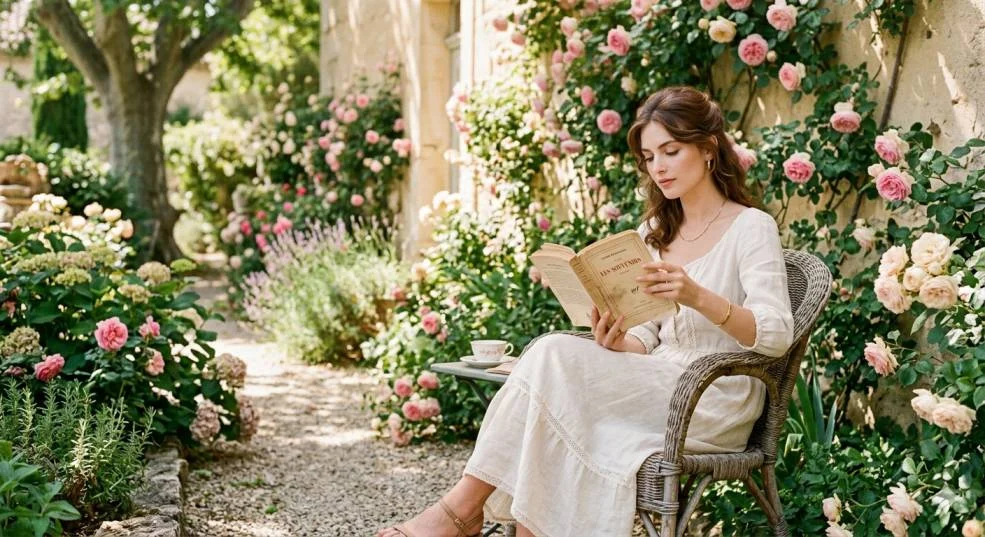
French girl names are among the most sought-after in global naming culture and for good reason. They carry femininity with substance, elegance without fragility, and a cultural depth that makes them feel chosen rather than simply pretty.
Élodie A French name of uncertain but ancient origin, possibly from the Greek Alodia, meaning “foreign riches,” or from early medieval saints’ names.
Has a particular quality that makes it irresistible it is three syllables of pure melody, ending in that open -ie sound that gives French names their characteristic lightness.
It is well-known in France but remains genuinely rare in English-speaking countries, which makes it extraordinary for parents who want something internationally beautiful but uncommonly heard. Nickname: Élo is clean and modern.
Séraphine The French feminine form of Séraphin, from the Hebrew seraphim the highest order of angels.
More refined than the fuller Seraphina, the French form drops a syllable and gains a specific continental elegance that the Italian form doesn’t share.
Séraphine de Senlis was a French folk painter of extraordinary visionary power a woman of poverty who painted paradise with house paints and whose work now hangs in major museums.
That association gives the name both sacred and artistic dimensions. Nickname: Séra or Phine.
Marguerite The French form of Margaret, from the Greek margaron, meaning “pearl.” But Marguerite in French also means “daisy” the white field flower which gives the name a beautiful double meaning: precious and wild at once.
Marguerite Yourcenar was the first woman elected to the Académie française, and Marguerite Duras was one of the defining voices of twentieth-century French literature.
This name belongs to intellectuals, naturalists, and anyone who carries elegance without announcing it. Nickname: Margot is one of the most beautiful French nicknames in existence.
Vivienne From the Latin Vivianus, meaning “alive” or “full of life.” The French spelling with the double n and the final e gives it a specific weight and elegance that the English Vivian doesn’t share.
Vivienne Westwood made it a name of radical creative power; Vivienne Leigh (English but French-influenced spelling) gave it Old Hollywood glamour.
It is a name that feels genuinely alive in the mouth. Nickname: Vivi is warm and contemporary.
Geneviève The patron saint of Paris, whose intercession is credited with saving the city from Attila the Hun in the fifth century. The name is of uncertain Gaulish origin, possibly meaning “cohort
woman” or carrying pre-Roman roots. Geneviève is deeply Parisian the church on the Left Bank that houses the remains of France’s greatest figures (Voltaire, Rousseau, Victor Hugo, Marie Curie) is the Panthéon, built on the site of the abbey of Sainte-Geneviève.
To name a daughter Geneviève is to give her the patron saint of the most beautiful city in the world. Nickname: Genny or the French Vivi.
Florentine The adjectival form of Florence, meaning “flourishing” or “blooming,” rooted in the Latin florens. In French, Florentine is rarer than.
Florence and carries a specifically Renaissance-inflected elegance the word suggests the art, the architecture, and the intellectual culture of Florence filtered through the French sensibility.
It is long, warm, and carries an art-history dimension that few names can match. Nickname: Flora, Flore, or Tine.
Inès The French and Spanish form of Agnes, from the Greek hagnos, meaning “pure” or “chaste.” In France, Inès is considered chic in a specifically understated way it is the name of someone who does not try too hard and does not need to. Inès de la Fressange, the legendary French model and style icon, has made this name synonymous with effortless Parisian elegance. Short, precise, and carries an accent that makes it unmistakably French. No nickname needed or wanted.
Adélaïde From the Germanic Adalheidis, meaning “noble kind” or “of noble birth.” It was the name of medieval empresses and queens across Europe Adelaide of Italy was the Holy Roman Empress; Queen Adelaide was the consort of William IV of England.
In French, it carries a specifically aristocratic nineteenth-century quality that makes it feel both antique and genuinely fresh in the current vintage revival. Nickname: Adèle is one of the most elegant short French names available.
Céleste From the Latin caelestis, meaning “heavenly” or “of the sky.” Céleste is luminous, simple, and carries the specific quality of something that belongs to a higher register.
It is well-used in France but remains rare enough in English-speaking countries to feel genuinely distinctive. Marcel Proust’s housekeeper, Céleste Albaret, who tended him during the writing of In Search of Lost Time, gave the name a literary tenderness. Nickname: Cécé is warm and French.
Mathilde The French form of Matilda, from the Germanic Mahthildis, meaning “mighty in battle.
” Mathilde sounds softer than its Germanic origins suggest the French form files down the hard edges and produces something elegant and strong simultaneously. Queen Mathilde of Belgium carries it with contemporary royal dignity.
It is serious without being severe, noble without being cold. Nickname: Tilde or Mattie depending on how formal the context.
Fancy French Boy Names
French boy names occupy a particular naming space they are masculine without being aggressive, distinguished without being stiff, and carry a specific intellectual and historical weight that sets them apart from their English equivalents.
Théodore From the Greek Theodoros, meaning “gift of God.” In France, Théodore is currently in a significant revival parents are choosing it for its combination of gravitas and warmth.
Théodore Géricault painted The Raft of the Medusa, one of the most powerful paintings in French art history. The name carries both creative courage and intellectual depth. Nickname: Théo is clean, warm, and very much a contemporary French standard.
Aurélien The French form of Aurelius, from the Latin aureus, meaning “golden.” Marcus Aurelius the philosopher-emperor of Rome gave this name its intellectual authority; in French, it has a warm, flowing quality that the Latin original lacks.
It is distinctly French, rarely used in English-speaking countries, and carries a luminous quality that matches its golden meaning. Nickname: Aure or Lio.
Thibault A specifically French form of Theobald, from the Germanic Theudebald, meaning “bold people.” Thibault is one of those names that is immediately, unmistakably French the silent lt at the end, the specific combination of sounds that doesn’t exist in English.
It was common among medieval French nobility and has a distinctly aristocratic bearing. Nickname: Tibo is the standard French diminutive warm and unexpectedly cool.
Raphaël The French form of Raphael, from the Hebrew Refa’el, meaning “God has healed.” The angel Raphael, the Renaissance painter Raphael, and the French spelling with its accent and soft ending make this one of the most complete names in the French canon sacred, artistic, and beautifully balanced.
Nickname: Rapha is used across French sport and culture.
Florian From the Latin Florianus, connected to the Roman family name Florus, meaning “flowering” or “flourishing.” Florian has a softness that many French boy names don’t it is gentle, spring-like, and carries an aesthetic quality that makes it perfect for a creative, sensitive child.
It is well-used in France and Germany but rare in English-speaking countries. Nickname: Flo works beautifully in contemporary contexts.
Édouard The French form of Edward, from the Old English Eadweard, meaning “wealthy guardian
.” But where Edward feels solid and Anglo-Saxon, Édouard feels like a Degas painting refined, slightly melancholic, deeply Parisian. Édouard Manet is the most immediate cultural anchor.
It is a name for someone who will notice beautiful things and remember them. Nickname: Édou in French; Eddie in English-speaking contexts.
Armand From the Germanic Hermann, meaning “army man” or “soldier,” filtered through the French sensibility into something entirely different more romantic, more theatrical, more continental.
Armand is the hero of La Dame aux Camélias by Alexandre Dumas fils the lover of the doomed courtesan Marguerite Gautier, whose story became Verdi’s La Traviata. It is a name that carries the entire tradition of French Romantic literature in four letters. Nickname: Armi (French and warm).
Lucien From the Latin Lucius, meaning “light.” In France, Lucien has a specifically intellectual, slightly bohemian quality it is the name of writers, painters, and thinkers rather than soldiers or kings.
Lucien de Rubempré is the ambitious young poet-hero of Balzac’s Lost Illusions one of the greatest novels of the nineteenth century. The name carries that story: brilliant, beautiful, and slightly dangerous in its ambition. Nickname: Luc is the sharp, clean French short form.
Gaston From the Germanic , of uncertain meaning but possibly connected to the people of the southwestern French region known for its fierce independence and swaggering self-confidence.
Has an unfortunate association with the Disney villain, but in France it carries genuine aristocratic and regional pride. Gaston Bachelard was one of the greatest French philosophers of the twentieth century. The name deserves reclamation. Nickname: none needed Gaston is complete.
Octave From the Latin Octavius, meaning “eighth.” In France, Octave has a specifically nineteenth-century literary quality it appears in Stendhal, in Mérimée, in the salons of the Romantic era. It is rare, musical, and carries a specific register of French intellectual culture that more common names cannot access. Nickname: Octo (playful) or simply Octave in full.
Fancy French Last Names
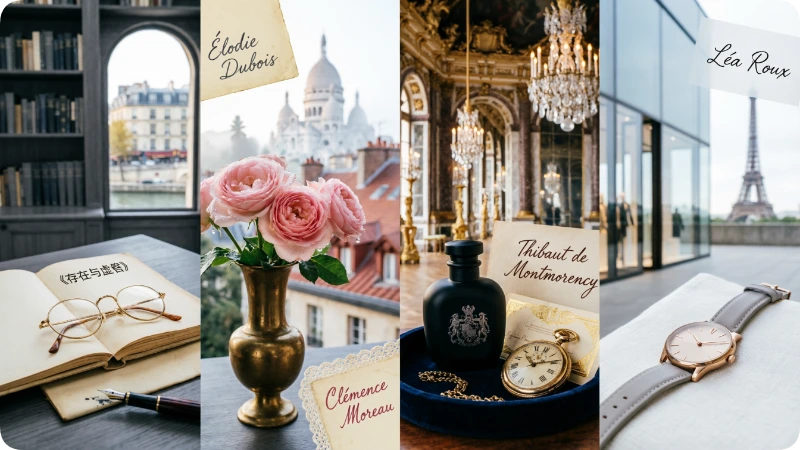
French surnames carry the same timeless elegance as French first names. Many originated from noble families, occupations, landscapes, or historic regions, giving them a rich cultural identity that has lasted for centuries. Whether you’re naming a baby, creating a fictional character, choosing a family name for a story, or simply looking for a sophisticated French surname, these elegant last names combine history with unmistakable French charm.
| French Last Name | Meaning / Origin | Style |
|---|---|---|
| Dubois | “From the woods” | Classic & Timeless |
| Beaumont | Beautiful mountain | Noble |
| Delacroix | Of the cross | Aristocratic |
| Chevalier | Knight | Royal |
| Moreau | Dark-skinned or Moorish ancestry | Vintage |
| Laurent | Crowned with laurel | Elegant |
| Rousseau | Red-haired | Literary |
| Fontaine | Fountain or spring | Romantic |
| Marchand | Merchant | Historic |
| Lefèvre | Blacksmith | Traditional |
| Blanchet | Little white or fair-haired | Soft |
| Montclair | Bright mountain | Luxurious |
| Charpentier | Carpenter | Historic |
| Devereaux | From Évreux | Aristocratic |
| Bellerose | Beautiful rose | Romantic |
| Deschamps | From the fields | Nature-inspired |
| Valois | Historic French royal dynasty | Regal |
| Monet | Associated with the famous painter Claude Monet | Artistic |
| Garnier | Keeper of grain | Classic |
| Renard | Fox | Clever & Stylish |
How to Choose a Fancy French Last Name
The best French surnames usually share three qualities: a meaningful history, graceful pronunciation, and timeless appeal. Noble names like Delacroix, Beaumont, and Valois create an aristocratic impression, while names such as Fontaine, Bellerose, and Renard feel softer, more romantic, and suitable for modern characters, brands, or creative projects. If you’re pairing a first and last name, aim for a balance in rhythm for example, Élodie Beaumont, Aurélien Delacroix, or Geneviève Fontaine all sound naturally elegant.
French Boy Names Popular in France Today
French naming trends continue to blend tradition with modern style. While timeless classics remain popular, many parents in France also prefer shorter, effortlessly elegant names that travel well across different languages. If you’re looking for a French boy name that’s both fashionable and enduring, these are among today’s most admired choices.
| Name | Meaning | Why It’s Popular |
|---|---|---|
| Léo | Lion | Short, modern, and internationally loved |
| Gabriel | God is my strength | Timeless biblical classic with French elegance |
| Louis | Famous warrior | Royal history and sophisticated charm |
| Arthur | Bear or noble | Strong, classic, and consistently popular |
| Raphaël | God has healed | Artistic, refined, and widely admired |
| Jules | Youthful | Chic, literary, and distinctly French |
| Théo | Gift of God | Friendly, stylish, and easy to pronounce |
| Hugo | Mind or intellect | Modern favorite with historical roots |
| Lucas | Bringer of light | Familiar across many cultures |
| Noah | Rest or comfort | International appeal with gentle elegance |
| Adam | Man or earth | Simple, timeless, and universally recognized |
| Maël | Prince or chief | A modern Breton favorite in France |
| Sacha | Defender of people | Soft yet masculine with European flair |
| Mathis | Gift of God | Contemporary and widely used |
| Antoine | Priceless one | Sophisticated French classic |
Why These Names Stand Out
Many of today’s most popular French boy names succeed because they feel effortlessly refined rather than overly formal. Names like Léo, Théo, and Hugo are short and modern, making them easy to pronounce around the world. Others, such as Louis, Raphaël, and Antoine, carry centuries of French history while still feeling fresh for a new generation. Their balance of elegance, simplicity, and international appeal makes them excellent choices for families seeking a name that will age gracefully.
French Boy Names Starting With A
If you’re specifically looking for French boy names that begin with the letter A, you’ll find plenty of timeless choices that blend elegance, history, and charm. Many of these names have roots in Latin, Germanic, or Greek traditions and have been embraced in France for generations. Whether you prefer something classic, aristocratic, or modern, these French names starting with A offer plenty of inspiration.
| Name | Meaning | Style |
|---|---|---|
| Adrien | From Hadria; dark one | Classic & Sophisticated |
| Amaury | Work-power; brave ruler | Noble & Medieval |
| Armand | Soldier or army man | Romantic & Traditional |
| Aurélien | Golden | Elegant & Intellectual |
| Antoine | Priceless one | Timeless French Classic |
| Alexis | Defender or protector | Modern & Refined |
| Alain | Handsome or cheerful | Vintage French |
| Alphonse | Noble and ready | Aristocratic |
| Augustin | Great or magnificent | Historic & Distinguished |
| Anatole | Sunrise or east | Literary & Cultured |
| Achille | Pain or sorrow (Greek origin) | Strong & Mythological |
| Albin | White or bright | Gentle & Rare |
| Aristide | The best | Intellectual & Historic |
| Aubin | White or fair | Soft & Traditional |
| Alaric | Ruler of all | Powerful & Rare |
Choosing the Right French “A” Name
French names beginning with A range from short and modern to richly historic. Adrien, Antoine, and Alexis are excellent choices if you want a name that’s easy to pronounce internationally. For a more distinguished feel, Amaury, Aurélien, Armand, and Augustin reflect France’s noble heritage and literary tradition. If you’re drawn to rare French names, Aubin, Aristide, and Albin offer unique alternatives while preserving unmistakable French character.
The Most Elegant French Names You Haven’t Considered
These are the names that sit just below mainstream awareness deeply rooted in French culture, carrying exceptional beauty, and almost entirely unused outside France.
For Girls
Solène A Breton French name of uncertain origin, possibly connected to the Latin sollemnis, meaning “solemn” or “ceremonial.
” It is soft, two syllables, and carries a particular quality of composed dignity. Very popular in France in the 2000s and 2010s, almost entirely unknown in English-speaking countries. It is elegant precisely because it sounds French without being the obvious choice.
Apolline The French feminine form of Apollo, the Greek god of music, poetry, light, and prophecy. Apolline carries the sun’s energy in a specifically French, feminine form.
A fifth-century Christian martyr named Apollonia (whose name inspired Apolline) was the patron saint of dentists a wonderfully incongruous association for such a beautiful name. It is rare, mythologically anchored, and carries exceptional beauty.
Ondine From the Latin unda, meaning “wave.” In German Romantic mythology, Ondine (or Undine) is a water spirit who falls in love with a mortal. In French, Ondine is a ballet by Debussy’s contemporary Ravel and a play by Jean Giraudoux.
It is short, aquatic, mythological, and almost never used as a given name which makes it extraordinary.
Mahaut A medieval French form of Mathilde, used in the twelfth and thirteenth centuries. Mahaut d’Artois was one of the most powerful women in medieval France a countess, regent, and formidable political figure.
The name is genuinely rare, medieval, and carries a specific historical depth that its more common descendant Mathilde does not share.
Alienor The Old French form of Eleanor, the name of Aliénor d’Aquitaine Eleanor of Aquitaine one of the most powerful and fascinating women in medieval history:
Queen of France, Queen of England, patron of troubadour poetry, mother of Richard the Lionheart. The Old French spelling Alienor is almost never used as a given name today and is consequently extraordinary.
For Boys
Théophile From the Greek Theophilos, meaning “friend of God” or “beloved of God.” In France, Théophile has a specifically literary, nineteenth-century quality .
Théophile Gautier was one of the great French Romantic writers, author of the ballet Giselle and the novel Mademoiselle de Maupin. Long, warm, and carrying exceptional cultural depth. Nickname: Théo or Phile.
Enguerrand A medieval French name of Germanic origin, meaning possibly “angel-raven.” Enguerrand de Coucy was one of the greatest knights of fourteenth-century France.
The name is extraordinarily rare almost never used today and carries the specific quality of deep medieval France, before the Renaissance smoothed everything into something more recognizable.
Amaury A French form of Amalric, a medieval name of Germanic origin meaning “work-power.” Amaury was the name of crusader kings of Jerusalem in the twelfth century.
It has a warm, rounded sound and a specifically medieval French quality that makes it both unusual and deeply rooted.
Guilhem The Occitan (southern French) form of William, from the Germanic Willahelm, meaning “will-helmet” or “determined protector.
” Guilhem de Peitieu William IX of Aquitaine is considered the first troubadour, the inventor of the lyric poetry tradition that shaped all of Western love poetry. The Occitan form is rarer and carries more specific southern French and troubadour culture.
French Middle Names for Boys
A well-chosen middle name adds balance, personality, and family significance to a full name. French middle names are especially popular because they sound refined without overpowering the first name. Whether you’re honoring French heritage or simply love the language’s elegance, these middle names pair beautifully with both French and international first names.
| Middle Name | Meaning | Pairs Well With |
|---|---|---|
| Louis | Famous warrior | Gabriel Louis, Arthur Louis |
| Luc | Light | Adrien Luc, Julien Luc |
| André | Brave and manly | Hugo André, Léo André |
| Henri | Ruler of the home | Raphaël Henri, Lucas Henri |
| Noël | Christmas | Antoine Noël, Jules Noël |
| René | Reborn | Émile René, Louis René |
| Marcel | Little warrior | Hugo Marcel, Gabriel Marcel |
| Jean | God is gracious | Arthur Jean, Théo Jean |
| Pierre | Rock | Adrien Pierre, Luc Pierre |
| Claude | person with a disability or enclosure | Augustin Claude, Alain Claude |
| Paul | Small or humble | Jules Paul, Léo Paul |
| Bastien | Venerable | Antoine Bastien, Hugo Bastien |
| Rémi | Oarsman | Arthur Rémi, Gabriel Rémi |
| Michel | Who is like God? | Louis Michel, Adrien Michel |
| Étienne | Crown or garland | Lucas Étienne, Raphaël Étienne |
Tips for Choosing a French Middle Name
The best French middle names complement the rhythm of the first name rather than competing with it. Short classics like Luc, Jean, and Paul create a clean, timeless combination, while names such as Henri, Marcel, Étienne, and Rémi add a more traditional French touch. If the first name is long, a shorter middle name often creates better balance. Likewise, a simple first name can be elevated with a distinguished middle name that reflects French history and culture.
French & English Baby Boy Names
Finding a baby name that works beautifully in both French and English can make pronunciation, spelling, and international use much easier. These bilingual names retain their French charm while feeling familiar in English-speaking countries, making them excellent choices for modern families who value both elegance and versatility.
| Name | Meaning | Why It Works in Both Languages |
|---|---|---|
| Gabriel | God is my strength | Classic, biblical, and internationally recognized |
| Lucas | Bringer of light | Easy to pronounce in French and English |
| Louis | Famous warrior | Royal, timeless, and elegant |
| Théo | Gift of God | Short, modern, and stylish |
| Léo | Lion | Simple pronunciation with global appeal |
| Julien | Youthful | Distinctly French yet familiar in English |
| Adrien | From Hadria | Sophisticated and easy to spell |
| Raphaël | God has healed | Artistic and internationally admired |
| Arthur | Bear or noble | Traditional favorite in both cultures |
| Hugo | Mind or intellect | Strong, refined, and widely recognized |
| Maxime | Greatest | Modern French classic with international appeal |
| Antoine | Priceless one | Elegant French alternative to Anthony |
| Noël | Christmas | Meaningful, festive, and timeless |
| Victor | Winner or conqueror | Strong historical name in both languages |
| Émile | Rival or eager | Literary, sophisticated, and easy to pronounce |
Choosing a French-English Baby Name
A bilingual name should feel natural in everyday conversation while preserving its cultural character. Names like Lucas, Gabriel, Arthur, and Victor are excellent choices because they require little or no pronunciation adjustment between French and English. If you prefer a stronger French identity, Théo, Raphaël, Antoine, and Émile offer unmistakable French elegance while remaining easy for English speakers to recognize and remember.
These names are ideal for multicultural families, parents living abroad, or anyone looking for a timeless name that feels at home in more than one language.
Fancy French Names From Literature and Art
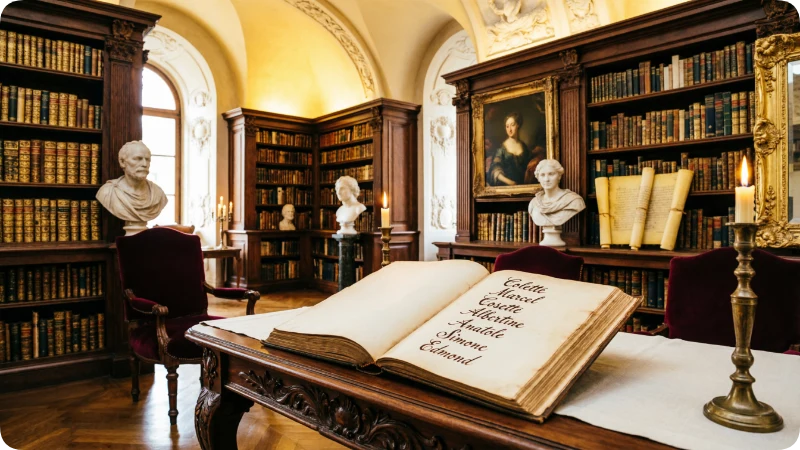
French literary and artistic culture has produced some of the most beautiful names in Western civilization. These names carry specific cultural anchors.
| Name | Cultural Anchor | Work / Figure |
| Colette | French novelist | Gigi, Chéri, the defining voice of female desire |
| Simone | Simone de Beauvoir | The Second Sex, existentialism, radical freedom |
| Marcel | Marcel Proust | In Search of Lost Time, the greatest novel ever written |
| Albertine | Proust’s Recherche | The mysterious beloved, memory and longing |
| Swann | Proust’s Recherche | Swann’s Way, refined aesthetic sensibility |
| Anatole | Anatole France | Nobel Prize in Literature, 1921 |
| Rémy | French culinary culture | The aspirational chef Ratatouille gave it warmth |
| Edmond | Edmond Dantès | Alexandre Dumas’s The Count of Monte Cristo |
| Cosette | Victor Hugo’s Les Misérables | The redeemed orphan, innocence and resilience |
| Enjolras | Victor Hugo’s Les Misérables | The passionate revolutionary, idealism made human |
Cosette deserves particular attention. Victor Hugo’s waif in Les Misérables is one of the most beloved characters in all of French literature and her name, which Hugo invented, carries a quality of fragile beauty rescued from suffering. It is rarely used as a given name, which makes it genuinely distinctive. Nickname: Coco is warm and French.
Enjolras for those naming fantasy characters or literary projects is one of the most extraordinary names in French literature. The student revolutionary of Les Misérables who dies at the barricade with absolute conviction is a figure of heartbreaking idealism. The name itself is invented by Hugo, of uncertain form, but it carries that character entirely.
Fancy French Names for Pets
here is something irresistible about calling a cat or a small dog by a name that sounds like it belongs in a Parisian café.
Cat
- Biscuit (French pronunciation: bees-KWEE)
- Minou (French for kitty)
- Bijou (jewel)
- Colette
- Margot
- Céleste
- Remy
- Gaston (irresistible on a large, self-important cat)
- Lumière (light)
- Éclair (the pastry and a wonderful cat name)
- Chéri / Chérie (darling)
- Miette (crumb perfect for a tiny cat)
Dog
- Beau (handsome)
- Belle (beautiful)
- Bijou (jewel)
- Fleur (flower)
- Jacques
- Pierre
- Gigi
- Coco
- Voilà (for a dog who appears at the perfect moment)
- Renard (fox for a clever, quick dog)
French Names for Brands, Businesses, and Creative Projects
The French naming aesthetic is enormously powerful in branding luxury goods, beauty, fashion, food, and hospitality all draw on French names for their associations with quality, elegance, and refinement.
Luxury and Fashion
- Maison Céleste
- Atelier Vivienne
- Lumière & Co.
- Élodie Paris
- La Marguerite
- Florentine Studio
- Séraphine (already used as a maternity brand proof of concept)
- Aurore (dawn French luxury hotel name energy)
- La Belle Époque
- Château Inès
Beauty and Wellness
- Éclat (sparkle, radiance)
- Clarté (clarity)
- Douceur (softness, sweetness)
- La Lumière Skincare
- Céleste Beauty
- Ondine (water-based beauty perfect)
- Rose Solène
- Pureté (purity)
- Nuance
- L’Essence
Food and Hospitality
- Brasserie Marguerite
- Café Élodie
- Chez Vivienne
- La Table de Geneviève
- Pâtisserie Céleste
- Le Florian
- Bistrot Armand
- Maison Théodore
- La Cave d’Aurélien
- Restaurant Edmond
French Usernames with a Chic French Aesthetic
French-inspired usernames have become increasingly popular across Instagram, TikTok, Pinterest, Discord, and gaming platforms. They combine elegance, simplicity, and a touch of Parisian charm, making them perfect for creators, artists, fashion lovers, and anyone who appreciates French culture. Whether you want something soft and romantic or bold and luxurious, these aesthetic French usernames offer plenty of inspiration.
| Username Idea | Style |
|---|---|
| MaisonLune | Elegant & Minimalist |
| FleurNoire | Dark Romantic |
| CaféVelours | Cozy & Vintage |
| LumièreSoul | Dreamy |
| BelleÉtoile | Celestial |
| RoseDeParis | Feminine |
| PetitNuage | Soft Aesthetic |
| VeloursBlanc | Luxury |
| LaViolette | Floral |
| BleuCharm | Modern |
| CielDoré | Elegant |
| MademoiselleLune | Parisian |
| BijouRose | Chic |
| ÉtoileClaire | Graceful |
| CoeurParis | Romantic |
| MaisonBelle | Luxury Lifestyle |
| FleurDeLuxe | Sophisticated |
| ChérieStudio | Creative |
| DouceVie | Soft Girl |
| LePapillon | Artistic |
Tips for Creating a French-Inspired Username
The most memorable French usernames are short, elegant, and easy to read. Combining a French word with a nature-inspired term, color, or meaningful object often creates a unique result. Words like Maison (house), Lumière (light), Étoile (star), Fleur (flower), Bijou (jewel), Velours (velvet), and Ciel (sky) instantly add a refined French aesthetic. For a more personal touch, you can also combine your first name with a French word—for example, EmmaLumière, LucasVelours, or ClaireÉtoile.
Whether you’re creating a social media handle, gaming profile, creative portfolio, or personal brand, a French-inspired username offers a timeless blend of sophistication and individuality.
Fancy French Names by Personality and Vibe
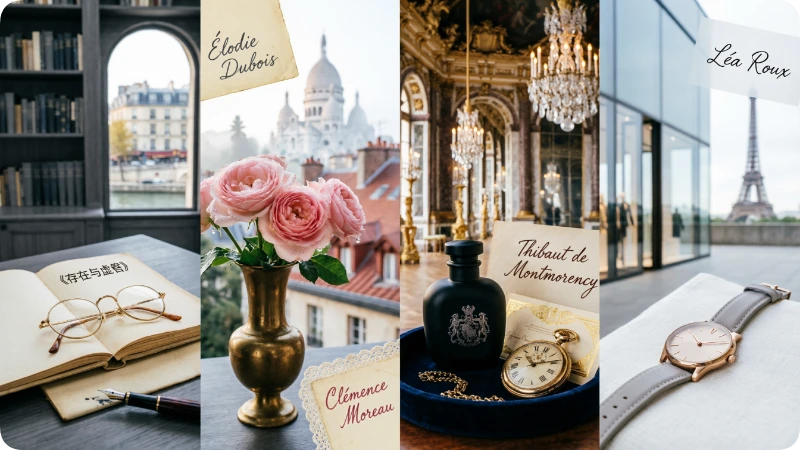
The Parisian Intellectual
Simone, Marcel, Lucien, Colette, Théophile, Anatole, Albertine, Julien
The Romantic at Heart
Élodie, Florian, Armand, Ondine, Raphaël, Violette, Dorian, Solène
The Aristocratic Soul
Marguerite, Thibault, Adélaïde, Gaston, Éléonore, Édouard, Mahaut, Alienor
The Modern French Minimalist
Inès, Hugo, Léa, Luc, Camille, Théo, Claire, Pierre
The Art and Culture Lover
Séraphine, Aurélien, Florentine, Octave, Apolline, Guilhem, Cosette
Sibling Pairing Ideas for Fancy French Names
| Girl Name | Sister Pairing | Brother Pairing |
| Élodie | Solène | Florian |
| Marguerite | Apolline | Armand |
| Vivienne | Céleste | Lucien |
| Séraphine | Ondine | Théophile |
| Geneviève | Adélaïde | Édouard |
| Inès | Camille | Hugo |
| Mathilde | Alienor | Thibault |
| Florentine | Mahaut | Aurélien |
FAQs: Fancy French Names
What are the fanciest French girl names?
The most elegant French girl names include Séraphine, Marguerite, Geneviève, Vivienne, Adélaïde, Florentine, Apolline, and Élodie. These names carry the deepest combination of French cultural history, phonetic elegance, and literary association.
What are fancy French boy names that sound distinguished?
Thibault, Aurélien, Édouard, Théophile, Armand, Octave, Guilhem, and Amaury are among the most distinguished French boy names each carrying a specific layer of French history, literature, or nobility.
Are French names difficult to pronounce in English?
Some French names require attention to specific phonetic features the nasal vowels, the silent letters, the accents. Names like Inès, Théo, Raphaël, Élodie, and Céleste are very accessible to English speakers. Names like Thibault and Guilhem require a little more care but are well worth it. The pronunciation challenge is often overstated most French names are far more accessible than they appear on the page.
What French names are rare but beautiful?
Ondine, Apolline, Solène, Mahaut, Alienor, Théophile, Enguerrand, and Amaury are all genuinely rare while carrying exceptional beauty and cultural depth. These names are widely unknown outside France, making them extraordinary choices for families who want something distinctive.
What are short fancy French names?
Inès, Luc, Léa, Théo, Flore, Armand, Hugo, and Claire are all short French names with elegance. Inès in particular two syllables, an accent, and the history of Agnes filtered through French and Spanish culture represents the peak of short French name sophistication.
Do French names work in English-speaking countries?
Absolutely. Many French names have been used in English-speaking countries for centuries Eleanor, Vivienne, Raphael, Theodore. Even distinctly French names like Élodie, Inès, and Théo are increasingly used by English-speaking parents drawn to the French aesthetic. The key is choosing names that are phonetically accessible and carry meanings worth knowing.
What are the sexiest French names?
French names are often considered attractive because of their smooth pronunciation, romantic sound, and timeless elegance. For women, Vivienne, Séraphine, Élodie, Anaïs, Inès, Céleste, and Marguerite are frequently admired for their graceful and sophisticated appeal. For men, Raphaël, Lucien, Aurélien, Armand, Thibault, Hugo, and Julien stand out for their confident yet refined character. Ultimately, the sexiest French name is one that combines beautiful pronunciation with a meaningful history and a personality that matches the person who carries it.
Are French names good for fantasy characters?
Absolutely. French names naturally suit fantasy worlds because they sound elegant, mysterious, and rich in history. Names like Séraphine, Ondine, Apolline, Alienor, Théophile, Amaury, Guilhem, and Enguerrand evoke medieval legends, mythology, and classic European literature, making them excellent choices for fantasy novels, role-playing games, and fictional kingdoms. Pairing a distinctive French first name with an elegant surname such as Delacroix, Beaumont, or Montclair creates a memorable fantasy character with an authentic European feel.
What are the most complicated French names?
Some French names appear difficult at first because of silent letters, accents, and unique pronunciation rules. However, they become much easier once you hear them spoken. Enguerrand, Geneviève, Thibault, Guilhem, Mahaut, Apolline, Aurélien, and Séraphine are among the most distinctive French names with more complex spellings and pronunciations. Their rarity and historical depth often make them especially appealing to parents, writers, and anyone looking for a truly unique French name.
What are some unique French last names?
If you’re looking beyond common surnames, France offers many distinctive family names with noble, literary, or regional origins. Elegant choices include Delacroix, Beaumont, Montclair, Bellerose, Devereaux, Valois, Charpentier, Fontaine, Renard, and Chevalier. These surnames work beautifully for baby names, fictional characters, creative brands, or anyone seeking a sophisticated French identity while preserving a strong cultural connection.
The Names That Carry a Civilization
French names are not merely pretty sounds.
They are the product of a civilization that built cathedrals and painted luminous canvases and wrote novels of extraordinary length and complexity and developed a philosophy of pleasure and a philosophy of freedom and took seriously more seriously than most cultures the idea that beauty is not trivial. That it is, in fact, essential.
When you choose a French name, you are choosing that inheritance. The specific sound of a language that spent centuries refining itself in royal courts and Left Bank cafés and provincial gardens and Provençal vineyards. You are giving someone a name that will sound distinguished in any room they walk into, on any continent, in any decade.
That is not a small gift.
Choose the name that carries the quality you want your child, your character, or your brand to embody and then let the French language do what it has always done best: make it beautiful.

I am Olivia Hayes, a dedicated Name Researcher and Content Writer at NameopediaHub.com. I create engaging and well-researched content about name meanings, origins, trends, and unique naming ideas to help readers explore the fascinating world of names. nameopediahub.com