Featured Snippet
Names that mean demon or carry demonic associations include Lilith, Malphas, Astaroth, Raum, Samael, Azazel, Asmodeus, Phenex, Valac, and Abaddon.
These names come from Hebrew demonology, the Ars Goetia, Babylonian mythology, Japanese folklore, and world religious traditions.
The Names That Live in the Shadow Side of Human Imagination
Every culture that has ever existed has named its demons.
Not out of worship though that happened too but out of a deep human instinct to give shape to what frightens us. To name the darkness is to know it. To know it is to have some power over it. The great demonologies of history the Ars Goetia, the Babylonian spirit lists, the Japanese oni traditions, the Hebrew texts of late antiquity were not merely catalogs of fear. They were attempts to map a territory that the human mind has always known exists: the shadow side of experience, the forces that undo rather than create, the energies that live beyond the comfortable boundaries of the ordinary.
The names that came from this mapping are extraordinary.
They are ancient, layered, and carry meanings that go far deeper than simple “evil.” Many demon names in mythology carry the energy of fallen angels beings of tremendous power and beauty who exist in opposition rather than darkness by nature. . Others still are psychological forces personifications of human drives like lust, pride, and destruction that humans found it easier to name than to examine directly.
This guide exists for writers building fictional worlds, gamers creating dark characters, parents drawn to powerful unconventional names, and anyone fascinated by the rich, strange territory of world demonology.
Who Searches for Names That Mean Demon And Why
The search intent behind this keyword is overwhelmingly creative and cultural rather than concerning.
The primary audience is fiction writers and worldbuilders fantasy, horror, dark fiction authors who need names for antagonists, complex dark figures, or morally ambiguous characters that feel authentically rooted in mythological tradition rather than invented.
The second major audience is gamers players of RPGs like Dungeons & Dragons, Pathfinder, and video games like Hades, Devil May Cry, and Elden Ring who want character names or gaming personas with genuine dark mythology behind them.
The third audience is parents drawn to dark aesthetics the growing community of parents who find beauty in names from darker traditions, gothic l, and mythology rather than conventional naming culture.
The fourth is curious researchers people with a genuine intellectual interest in demonology, religious history, and comparative mythology.
This guide serves all four.
Names That Mean Demon Overview by Tradition
| Tradition | Example Names | Character |
| Hebrew Demonology | Lilith, Samael, Azazel, Abaddon | Fallen angels, adversaries, ancient |
| Ars Goetia (72 Demons) | Malphas, Raum, Valac, Phenex | Named demons with specific powers |
| Babylonian / Sumerian | Pazuzu, Lamashtu, Asag | Ancient, elemental, primal |
| Japanese Folklore | Oni, Tengu, Raijin, Akuma | Nature spirits, fierce guardians |
| Islamic Tradition | Iblis, Ifrit, Marid, Shaytan | Jinn hierarchy, fire beings |
| European Folklore | Mephistopheles, Astaroth, Belial | Medieval, literary, philosophical |
| Hindu Mythology | Asura, Ravana, Vritra | Cosmic opponents, complex figures |
| Slavic Folklore | Chort, Kikimora, Viy | Eastern European, deeply atmospheric |
Hebrew and Biblical Names That Mean Demon
Hebrew demonology is one of the richest naming traditions in the world producing names that have traveled from ancient texts into modern fiction, fantasy, and cultural consciousness.
Lilith
Perhaps the most powerful and culturally resonant demon name in the entire Western tradition.
In Jewish folklore most fully developed in the medieval Alphabet of Ben-Sira Lilith was the first wife of Adam, who refused to be subservient and left Eden of her own will. She became associated with night, with the wind, with the danger to newborns, and with an absolute, terrifying independence.
In Akkadian and Babylonian sources, the word lilitu referred to storm demons.Has been reinterpreted in feminist , in art, in literature, and in occult tradition as a figure of autonomy rather than simple evil. As a name it is short, dark, and carries five thousand years of accumulated symbolism.
Samael
In Jewish mystical tradition (Kabbalah and later texts), Samael is the chief of the evil spirits the accuser, the adversary, sometimes identified with the serpent of Eden, sometimes with the angel of death. The name means “venom of God” or “poison of God” in some interpretations a compound of the Hebrew sam (venom) and El (God). Despite these associations, Samael appears in some traditions as a figure of enormous complexity not simply evil, but occupying a necessary role in the cosmic order. As a name it is powerful, dark, and carries deep mystical weight. The similarity to Samuel makes it slightly more approachable than many demon names.
Azazel
One of the most ancient names in Hebrew tradition appearing in the Book of Leviticus in the ritual of the scapegoat, where one goat was sent “to Azazel” (into the wilderness) bearing the community’s sins.. The name may derive from Hebrew roots meaning “scapegoat” or “fierce god.” In modern fiction, Azazel appears in the X-Men franchise as a teleporting mutant and in Philip Pullman’s His Dark Materials universe. As a name it is ancient, complex, and carries the specific energy of forbidden knowledge.
Abaddon
From the Hebrew abadon, meaning “destruction” or “place of destruction.” In the Hebrew Bible, Abaddon refers to the realm of the dead the deepest pit of Sheol. In the Book of Revelation (9:11), Abaddon is personified as the angel of the abyss, the king of the bottomless pit, whose name in Greek is Apollyon (“destroyer”). It is a name of absolute finality the destruction that comes from the deepest possible place. As a name for a character or gaming persona it is thunderous, ancient, and carries an irreducible darkness.
Asmodeus
One of the most prominent demons in Jewish tradition, appearing in the Book of Tobit (in the Catholic and Orthodox biblical canons) as a demon of lust who kills each of the seven husbands of Sarah before they can consummate their marriages. The name may derive from the Avestan Aeshma-daeva, a Zoroastrian demon of wrath, filtered through Hebrew tradition. In the Ars Goetia, Asmodeus (Asmoday) is the 32nd demon, a king of the infernal regions. In modern fiction and gaming, Asmodeus appears everywhere from Dungeons & Dragons (as the lord of the Nine Hells) to the anime The Seven Deadly Sins.
Belial
From the Hebrew beliya’al, meaning “worthlessness” or “without value.” In the Hebrew Bible, “sons of Belial” is a phrase used most wicked individuals those who have abandoned all moral value. In later Jewish and Christian tradition, Belial became personified as a demon prince one of the chief fallen angels, associated with lawlessness and the spirit of opposition to divine order. The Dead Sea Scrolls (War Scroll) present Belial as the chief adversary of light. Milton uses Belial in Paradise Lost as one of the fallen angels eloquent, pleasure-loving, and deeply persuasive. As a name it carries a specific literary and theological depth.
The Ars Goetia: Named Demons With Ancient Authority
The Ars Goetia the first section of the seventeenth-century grimoire The Lesser Key of Solomon lists 72 named demons, each with specific appearances, powers, and attributes. These names represent one of the most complete demonological naming systems in Western occult tradition and have become enormously influential in fantasy, gaming, and dark fiction.
Malphas
The 39th spirit of the Goetia, described as a great president of the infernal regions who appears as a crow and then takes human form. He builds houses, towers, and strongholds, destroys enemies’ desires, gives good familiars, and reveals secrets. The name has a dark, architectural quality something that builds rather than simply destroys. As a name it is unusual, powerful, and carries a specific Gothic atmosphere.
Raum
The 40th spirit, described as a great earl who appears as a crow before taking human form. Raum steals treasures from kings’ houses, destroys cities and dignities, and has knowledge of things past, present, and to come. Short, dark, and carrying a specific quality of elegant menace. For a character or gaming persona, Raum has an almost unbeatable combination of brevity and power.
Valac
The 62nd spirit, described as a great president who appears as a small boy with angel’s wings riding on a two-headed dragon. He gives true answers about hidden treasures and commands serpents. . As a name it is short, unusual, and carries both ancient authority and modern horror-culture resonance.
Phenex
The 37th spirit, described as a great marquis who appears as a phoenix (the mythological fire bird) and speaks with a pleasant voice. He is a poet of great excellence, teaches all wonderful sciences, and is willing and courteous. Phenex is one of the most beautiful names in the Goetia it carries the fire-bird symbolism and a specific quality of dark artistry. For a character who is simultaneously demonic and creative.
Foras
The 31st spirit, described as a mighty president who teaches the arts of logic and ethics, gives invisibility, delivers the afflicted, gives long life and good wisdom. As a name Foras is short, clean, and carries a slightly academic dark quality.
Orobas
The 55th spirit, a great prince who gives true answers to all questions on divinity, the creation of the world, and other secret things. He never deceives a quality that makes him unusual in the demonological tradition. Orobas is a name that carries dark authority with a strange integrity. For a morally complex dark character.
Vassago
The 3rd spirit, a mighty prince considered by some practitioners of the tradition to be of good nature. He declares things past and to come and discovers things hidden and lost. Vassago has a flowing, almost romantic quality for a demon name it sounds almost Italian, which gives it an unexpected elegance.
Buer
The 10th spirit, described as a great president who appears when the sun is in Sagittarius. He teaches philosophy, logic, and the virtues of all herbs and plants. He heals all diseases and gives good familiars. Buer is one syllable, blunt, and carries a specific quality of ancient learned authority.
Zagan
The 61st spirit, a great king and president, who appears first as a bull with gryphon’s wings. He makes men witty and can turn wine into water, water into wine, and blood into oil. Zagan is short, powerful, and carries a transformative energy that makes it excellent for characters associated with alchemy, change, or trickery.
Babylonian and Sumerian Demon Names
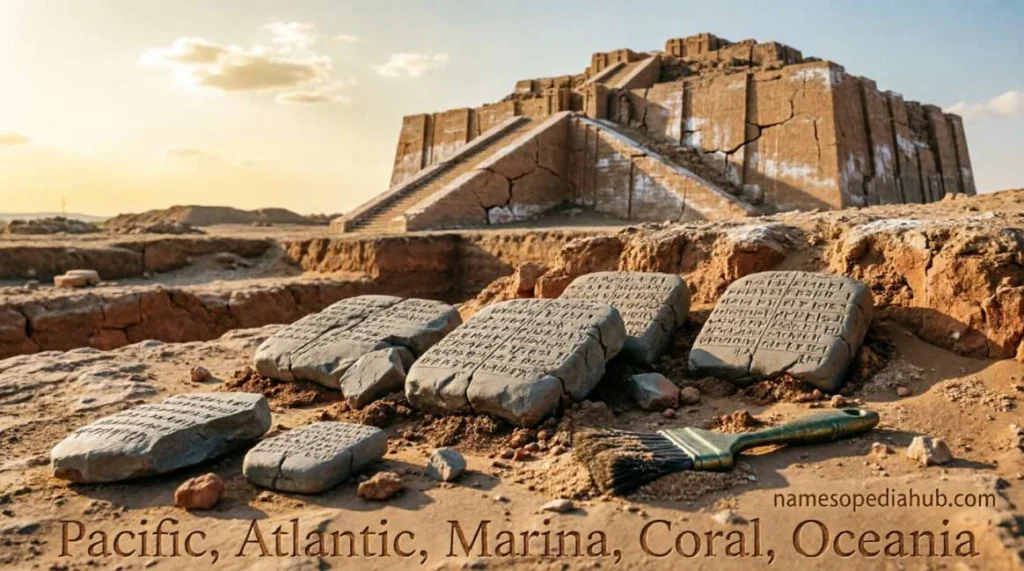
The oldest named demons in human history come from the ancient civilizations of Mesopotamia and their names carry a primal, elemental power that later traditions cannot fully replicate.
Pazuzu
The ancient Assyrian and Babylonian demon of the southwest wind associated with drought, locusts, and disease. Pazuzu is paradoxically invoked as a protective demon against other evil forces, particularly Lamashtu. His image winged, lion-headed, scorpion-tailed was used as an amulet. The film The Exorcist (1973) brought Pazuzu into mainstream Western horror consciousness and made this one of the most recognized demon names in popular culture. As a name it is ancient, distinctive, and carries four thousand years of accumulated symbolic power.
Lamashtu
An ancient Babylonian and Assyrian demoness of particular ferocity a goddess-level figure who was feared for attacking pregnant people and newborn children. Unlike most demons who were servants of the gods, Lamashtu was considered a divine being herself, daughter of the sky god Anu, making her unusually powerful. The name carries tremendous feminine dark energy a goddess of destruction and threatening power.
Asag
In Sumerian mythology, Asag was a demon of disease so hideous that his presence caused fish to boil alive in rivers. He was defeated by the hero-god Ninurta. The name is stark, old, and carries the specific weight of the oldest recorded literature in human history.
Humbaba
The guardian of the Cedar Forest in the Epic of Gilgamesh the oldest surviving literary work. Humbaba is not strictly a demon in the modern sense but occupies the role of monstrous guardian that later traditions would call demonic. His face was said to be formed from a single continuous coil of entrails. As a name it is ancient beyond most names and carries the specific weight of the world’s oldest story.
Japanese Demon Names and Dark Spirits
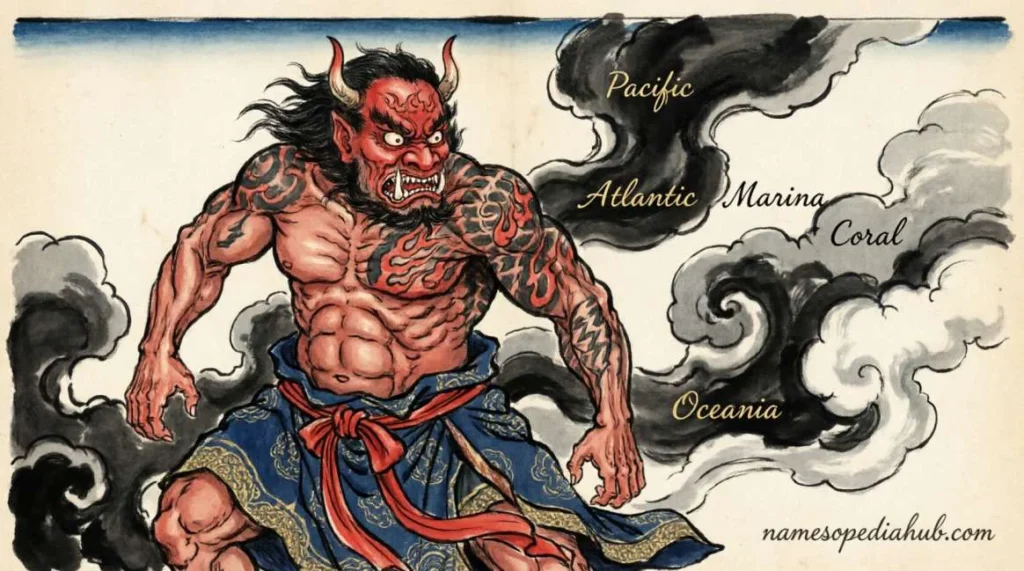
Japanese demonology oni, tengu, and the vast world of yokai offers some of the most visually and aesthetically compelling dark names in world mythology.
Oni
The primary demon figure of Japanese folklore a horned, club-wielding supernatural being associated with evil, illness, and misfortune. Oni range from terrifying to comically threatening. In modern Japanese culture, oni appear in anime, manga, and games as frequent antagonists and anti-heroes. Demon Slayer (Kimetsu no Yaiba) has brought oni mythology to enormous global audience. As a name it is short, immediately recognizable in gaming and anime culture, and carries a specific Japanese demonic authority.
Akuma
The Japanese word for “devil” or “demon” from Buddhist terminology for the embodiment of evil and temptation (cognate with the Sanskrit Mara). Akuma is the iconic Street Fighter video game character one of the most recognizable fighting game antagonists in history and has become a genuine cultural touchstone in gaming. As a name it is clean, dark, and immediately understood within gaming and anime culture.
Raijin
The Japanese god of thunder and lightning who has attributes closer to a demon in appearance terrifying, associated with storms and chaos. Raijin appears with his companion Fujin (wind god) across Japanese art, particularly in the famous Rinpa-style paintings. As a name it is powerful, weather-associated, and carries a fierce natural energy.
Tengu
The long-nosed, winged supernatural beings of Japanese folklore sometimes classified as demons, sometimes as mountain spirits or fallen Buddhist monks In anime and manga culture, Tengu appear frequently as both antagonists and complex figures. As a name it is unusual in English contexts, immediately recognizable in Japanese cultural settings.
Yamata no Orochi
The legendary eight-headed serpent of Japanese mythology, slain by the storm god Susanoo. Often shortened to Orochi as a name carrying enormous serpentine, multi-headed power. Orochi appears frequently in Japanese gaming (the SNK fighting game character Orochi is iconic).
Islamic Tradition: Jinn and Demonic Names
Iblis
The Islamic equivalent of Satan a jinn (or angel, in some interpretations) who refused God’s command to bow before Adam and paradise. The name may derive from the Greek diabolos (devil) filtered through Arabic. As a name it carries the specific weight of cosmic pride and rebellion.
Ifrit
A class of powerful jinn in Islamic tradition associated with fire, strength, and cunning. The word appears in the Quran (27:39). In One Thousand and One Nights, ifrits appear as dangerous, powerful supernatural beings. The name Ifrit carries fire energy and fierce power.
Marid
Another class of jinn associated with the sea and considered among the most powerful. Marids are often depicted as enormous, powerful beings capable of granting wishes when bound. As a name it carries oceanic power and a specific quality of constrained, enormous energy.
European Folklore and Literary Demon Names
Medieval European culture produced some of the most culturally embedded demon names in Western civilization names that appear in literature, art, and philosophy.
Mephistopheles T
he demon of the Faust legend the spirit who makes a bargain with the scholar Faust in exchange for his soul. Mephistopheles appears in Marlowe’s Doctor Faustus (1592) and most famously in Goethe’s Faust (1808), where he is given a complexity that elevates him far beyond a simple villain. His famous self-description “I am the spirit that always negates” is one of the most philosophically resonant lines in all of literature. The name is long and theatrical, which makes it perfect for fiction but challenging as a given name. Nickname: Mephisto.
Astaroth
In the Ars Goetia, Astaroth is a great duke who appears riding a dragon and carrying a serpent. He teaches mathematical sciences and crafts, and answers truly on all matters past, present, and to come. The name derives from the Canaanite goddess Astarte a fertility and war goddess who became demonized in Hebrew tradition. This history gives Astaroth a specifically fallen-divinity quality. As a name it is long, dark, and carries both ancient Near Eastern and medieval Christian demonological weight.
Baphomet
An idol or deity that the Knights Templar were accused of worshipping during their trial in the fourteenth century (the accusations were almost certainly fabricated under torture). The Baphomet figure became associated in Western occult tradition with a goat-headed figure of ambiguous symbolism. Eliphas Lévi’s 1854 drawing of the Baphomet is one of the most iconic images in Western occult art. As a name it is deeply embedded in occult and Gothic culture.
Belzebuth / Beelzebub
From the Hebrew Ba’al Zĕbûb, meaning “lord of the flies” originally the name of a Philistine deity, later interpreted as a prince of demons. In Paradise Lost, Beelzebub is Satan’s second-in-command. William Golding’s novel Lord of the Flies takes its title from this name, using it as a symbol of the darkness within human nature. As a name it is ancient, literary, and carries enormous cultural weight.
Dark and Demonic Names for Fiction, Gaming, and Characters
Fantasy Novel Antagonists
- Malphas (architectural, building-and-destroying energy)
- Vassago (elegant, morally complex)
- Phenex (dark poet, fire-bird imagery)
- Orobas (truthful demon excellent for complex characters)
- Samael (fallen angel energy, morally ambiguous)
- Azazel (forbidden knowledge, ancient watcher)
- Belial (eloquent, pleasure-loving, Paradise Lost depth)
Horror Fiction
- Valac (the Conjuring association is already established)
- Pazuzu (the Exorcist association)
- Lamashtu (feminine, ancient, specifically threatening)
- Abaddon (destruction, finality, the abyss)
- Lilith (rich feminist-horror complexity)
Gaming Characters and Personas
- Akuma (Street Fighter legacy, immediately legible)
- Raum (short, elegant, powerful)
- Zagan (transformation, trickery)
- Ifrit (Final Fantasy has made this name iconic in gaming culture Ifrit is a recurring summon entity)
- Oni (Demon Slayer, fighting games, immediate recognition)
Dark Aesthetic Usernames and Online Identity
- Malphas
- Phenex
- Raum
- Valac
- Vassago
- Azazel
- Samael
- Orobas
- Zagan
- Belial
Names With Demonic Associations Used as Given Names
Some names with dark mythological roots have crossed into mainstream given-name use worn by real people who carry the name’s depth without its associations overwhelming them.
| Name | Mythological Root | Current Use |
| Lilith | Hebrew demonology | In top 200 US girl names |
| Samael | Hebrew mysticism | Rare but used |
| Azazel | Hebrew tradition | Extremely rare given name |
| Akuma | Japanese Buddhism | Gaming identity primarily |
| Phenix | Goetia/Phoenix | Used as variant of Phoenix |
| Zagan | Goetia | Extremely rare |
| Belial | Hebrew Bible | Very rare |
| Asmodeus | Jewish/Christian | Primarily fictional |
Lilith represents the most significant example of a demon name entering mainstream use and it did so because the mythology around Lilith shifted in cultural interpretation. She is no longer primarily read as a danger but as a figure of independence and refusal of subservience. The name’s darkness transformed into something closer to power. This is the cultural mechanism by which demon names become nameable.
Girl Names That Mean Demon and Female Demon Names From Mythology
Many demonological traditions include powerful female entities whose names carry meanings associated with darkness, rebellion, chaos, forbidden knowledge, or supernatural power. While some originate as literal demons, others occupy the blurred boundary between goddess, spirit, and adversarial force.
| Name | Origin | Association |
|---|---|---|
| Lilith | Hebrew | Night demon, independence, rebellion |
| Lamashtu | Babylonian | Disease, destruction, primal feminine power |
| Astaroth | Demonized Astarte | Fallen divinity, wisdom |
| Naamah | Jewish folklore | Seduction and demonic tradition |
| Empusa | Greek mythology | Shape-shifting female demon |
| Hecate | Greek mythology | Magic, spirits, crossroads |
| Eisheth | Jewish demonology | Seduction and darkness |
| Abyzou | Near Eastern folklore | Child-stealing demon |
| Lamia | Greek mythology | Female monster and devourer |
| Gello | Byzantine folklore | Female spirit associated with children |
What girl names mean demon?
The best-known girl name associated with demons is Lilith, whose origins stretch from Mesopotamian demonology to Jewish folklore. Other female demon names include Lamashtu, Abyzou, Lamia, and Eisheth, each carrying centuries of mythological and supernatural symbolism.
Are there female demon names that work as real names?
Yes. Lilith is now a mainstream given name in many countries and is often interpreted as a symbol of independence and feminine power rather than evil. Names like Hecate and Lamia are also occasionally used by people drawn to mythology and gothic aesthetics.
Male Names That Mean Demon and Unique Demon Names for Boys
Male demon names appear across religious traditions, mythology, occult literature, and folklore. Many carry associations with forbidden knowledge, power, rebellion, destruction, or supernatural authority.
| Name | Origin | Association |
|---|---|---|
| Samael | Hebrew | Venom of God, adversary |
| Azazel | Hebrew | Scapegoat, forbidden knowledge |
| Asmodeus | Jewish tradition | Lust, infernal king |
| Belial | Hebrew | Lawlessness, rebellion |
| Abaddon | Hebrew | Destruction, the abyss |
| Malphas | Ars Goetia | Secrets, architecture |
| Raum | Ars Goetia | Destruction and prophecy |
| Orobas | Ars Goetia | Truth and hidden knowledge |
| Vassago | Ars Goetia | Prophecy and discovery |
| Zagan | Ars Goetia | Transformation |
| Pazuzu | Babylonian | Storms and protection |
| Iblis | Islamic tradition | Pride and rebellion |
| Ifrit | Islamic tradition | Fire and power |
| Mephistopheles | European folklore | Temptation and knowledge |
What are some male names that mean demon?
Popular male demon names include Samael, Azazel, Asmodeus, Belial, and Abaddon. These names come primarily from Hebrew demonology and later religious traditions, where they represent adversaries, fallen angels, and infernal rulers.
What are some unique demon names for boys?
Some of the most unique demon names include Malphas, Orobas, Vassago, Raum, Zagan, and Foras. These names originate largely from the Ars Goetia and are especially popular among fantasy writers, gamers, and worldbuilders.
FAQs:
What is the most powerful demon name in mythology?
By cultural reach and longevity, Lilith, Samael, Azazel, and Asmodeus from Hebrew tradition, and Pazuzu from Babylonian mythology, carry the most power. In the Ars Goetia system, Lucifer, Beelzebub, Asmodeus, and Belial are considered the four principal demon kings. Power in demonology is tradition-specific each system has its own hierarchy.
Are there demon names that work as real given names?
Yes. Lilith is now in the top 200 girl names in the United States. Samael, Phenix (as a variant of Phoenix), and Azazel are used rarely but genuinely. The key is whether the name’s cultural associations have shifted Lilith succeeded as a given name because her story was reinterpreted culturally.
What demon names come from the Ars Goetia?
The Ars Goetia lists 72 named demons including Malphas, Raum, Valac, Phenex, Orobas, Vassago, Foras, Buer, Zagan, and Astaroth. Each is given specific attributes, appearances, and powers. The complete list is a naming resource of extraordinary depth for dark fiction and worldbuilding.
What are demon names from Japanese mythology?
Key Japanese demon and dark spirit names include Oni (the general term), Akuma (devil), Tengu (mountain spirit/demon), Raijin (thunder demon), and Yamata no Orochi (eight-headed serpent). The yokai tradition provides dozens more, including Kappa, Kitsune (fox spirit), and Yuki-onna (snow woman).
What is the difference between a demon and a fallen angel in naming traditions?
In Hebrew tradition, fallen angels and demons are distinct categories fallen angels (like the Watchers of the Book of Enoch) are divine beings who chose to abandon their roles, while demons are often their offspring or separate classes of spirit. In later Christian tradition the categories merged significantly. Names like Azazel and Samael occupy both categories depending on the source text.
What are the most powerful demon names in mythology?
Some of the most powerful demon names across world mythology include Lilith, Samael, Azazel, Asmodeus, Belial, Abaddon, Pazuzu, Astaroth, Iblis, and Ifrit. Their power depends on the specific tradition. In Abrahamic demonology, figures like Asmodeus and Belial rank among the highest infernal powers, while Mesopotamian traditions regard beings like Pazuzu and Lamashtu as ancient supernatural forces.
Are there last names that mean demon?
Very few hereditary surnames literally mean “demon,” but some surnames have demonic or dark associations through mythology, folklore, or language. Examples include Diablo (Spanish for devil), Demoni, Belial, Lucifer (occasionally used as a surname in fiction), and surnames derived from supernatural folklore traditions. Most demon-related names historically functioned as personal names, titles, or mythological entities rather than family surnames.
The Names at the Edge of the Map
Every civilization that has ever existed understood that the world has an edge a place where the known and ordered gives way to something vast, dark, and not fully comprehensible.
The names in this guide come from that edge.
They are not simple names for simple evil. The names that human beings gave to the forces they found most difficult to understand pride, destruction, forbidden knowledg.
The chaos of storms, the terror of the dark, the uncanny persistence of death. They gave these forces names because naming is how we cope.
How we begin, however incompletely, to understand.
For a writer building a world, a gamer creating a character, or anyone drawn to the specifically dark beauty of mythological naming.
These names carry something that invented names cannot: the weight of thousands of years of human fear, imagination, and the stubborn insistence on giving darkness a face.
Use them with the respect that weight deserves.

I am Clara Bennett, a passionate Name Researcher and Content Writer at Nameopediahub.com . I share well-researched content about name meanings, origins, trends, and naming ideas to help readers discover unique and meaningful names from around the world. nameopediahub.com