A curated journey through the surnames that shaped medieval France and still carry breathtaking beauty today.
QUICK ANSWER
Old French last names originated from four main sources: occupations (Leblanc, Lefevre), geography (Dupont, Dubois), personal characteristics (Lebrun, Legrand), and noble lineage (de Beaumont, de Villiers). Many date back to the 11th–14th centuries and carry the soft, liquid sounds of the rolled R’s, nasal vowels, and elegant prefixes that make French surnames uniquely beautiful. Common prefixes include Le/La (the), Du/De (of the), and Beau/Belle (beautiful).
Where Do Old French Last Names Actually Come From?
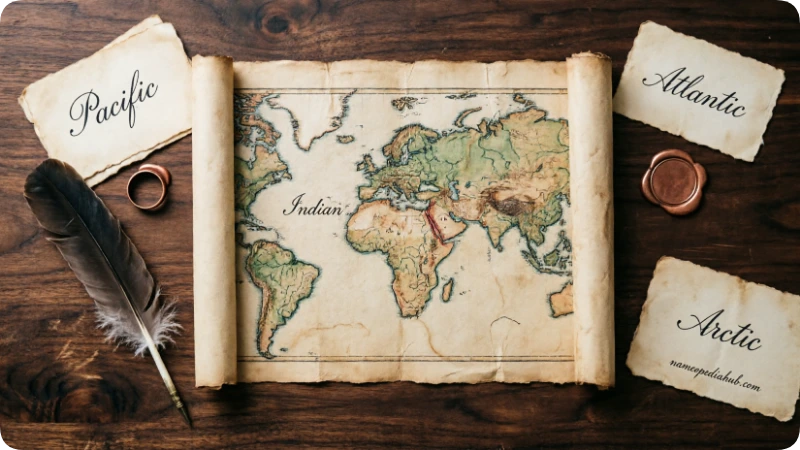
Before surnames became permanent family identifiers which happened gradually across France between the 12th and 15th centuries most French people went by a single given name, sometimes paired with a descriptive nickname. When the Church and the Crown began demanding more precise identification (for tax records, feudal rolls, and ecclesiastical registers), those nicknames became hereditary surnames.
The result? A beautifully logical taxonomy of last names tied to the real, lived world of medieval France.
Origin Types Overview:
| Origin Type | What It Describes | Examples | Vibe |
| Toponymic | Named for a place or landscape | Dupont, Dubois, Deschamps | Grounded · Rustic |
| Occupational | Named for a trade or craft | Lefevre, Mercier, Charpentier | Strong · Artisan |
| Descriptive | Named for a physical trait | Leblanc, Legrand, Petit | Vivid · Personal |
| Patronymic | Derived from father’s first name | Bernard, Martin, Simon | Classic · Ancestral |
| Noble / Aristocratic | Denotes land ownership with de/du | de Montfort, de la Croix | Elegant · Royal |
That little prefix de, du, des, le, la, les does a tremendous amount of heavy lifting. Dubois means literally “of the woods.” Dupont means “of the bridge.” These weren’t poetic inventions; they were practical addresses. Your ancestor lived by the bridge, so you became the family of the bridge.
“Old French surnames didn’t describe who you wanted to be. They described exactly where you were, what you did, and what the village remembered about your great-great-grandfather.”
Elegant Old French Noble Surnames (With the de Particle)
Nothing quite signals old-world aristocracy like a French particule that small, devastating de or du that once indicated land ownership. These aren’t just surnames; they’re declarations. And they remain some of the most visually and sonically stunning names in any language.
de Beaumont Origin: Toponymic · Old French Meaning: From “beau mont” beautiful mountain or fair hill. A name carried by medieval crusaders and Norman lords. Vibe: Majestic · Timeless · Literary
de Villiers Origin: Toponymic · Old French Meaning: Of the village estates. Suggests old landed gentry quiet power rather than flamboyant display. Vibe: Understated Elegance · Aristocratic
de la Croix Origin: Religious · Old French Meaning: Of the Cross. Originally tied to living near a crossroads or a crucifix monument. Deeply medieval. Vibe: Gothic · Spiritual · Dark Elegant
de Montfort Origin: Toponymic · Norman Meaning: Of the strong mountain or fortified hill. Linked to powerful Norman crusading families. Vibe: Bold · Chivalric · Fantasy-worthy
de Valois Origin: Royal · Old French Meaning: From the Valois region. One of France’s greatest royal dynasties ruled under this name for centuries. Vibe: Regal · Iconic · Romantic
de Bourbon Origin: Royal · Old French Meaning: From the ancient town of Bourbon. The House of Bourbon ruled France, Spain, and Naples. Vibe: Dynastic · Powerful · Classic
de Châtillon Origin: Toponymic · Old French Meaning: Of the little castle. This name was carried by one of the most powerful French noble families of the Crusades era. Vibe: Medieval · Stately · Rare
de Vermandois Origin: Toponymic · Frankish Meaning: From the ancient Vermandois region of northern France. One of the oldest Frankish noble lines. Vibe: Ancient · Scholarly · Distinguished
Why the “de” Particle Feels So Compelling
In modern usage especially in historical fiction, fantasy world-building, and character naming the de particle creates an instant sense of legacy. It implies land, memory, and inherited identity. If you’re naming a character who carries the weight of their bloodline, a de surname does that narrative work effortlessly.
Classic Old French Last Names That Are Still Widely Used
Some surnames are old French through and through medieval in origin, still alive today, still carrying their original charge. These are the names you’ll find across France’s genealogical records stretching back centuries, and still on café receipts and election rolls in modern Paris.
| Name | Meaning | Origin Type | Vibe |
| Dubois | Of the woods / forest-dweller | Toponymic | Earthy · Warm |
| Dupont | Of the bridge | Toponymic | Steady · Trustworthy |
| Lefevre | The blacksmith / ironworker | Occupational | Strong · Artisan |
| Leblanc | The white / fair-complexioned one | Descriptive | Clean · Soft |
| Legrand | The tall / great one | Descriptive | Commanding · Stately |
| Lebrun | The brown-haired one | Descriptive | Warm · Natural |
| Charpentier | Carpenter / woodworker | Occupational | Solid · Craftsman |
| Mercier | Merchant / fabric trader | Occupational | Mercantile · Worldly |
| Rousseau | The red-haired one | Descriptive | Vivid · Intellectual |
| Fontaine | Of the fountain or spring | Toponymic | Lyrical · Flowing |
| Garnier | Keeper of the granary | Occupational | Rustic · Provider |
| Bourgeois | Town-dweller / burgher | Social status | Urban · Sophisticated |
| Chevalier | Knight / horseman | Occupational | Chivalric · Noble |
| Pelletier | Furrier / fur trader | Occupational | Medieval · Textured |
| Morel | Dark-complexioned / swarthy | Descriptive | Mysterious · Dark |
Rare & Forgotten Old French Last Names Worth Reviving
These are the names that fell through the cracks of history carried by branches of families that dwindled, emigrated, or simply disappeared into time. They’re extraordinary precisely because you almost never hear them anymore. For writers, name enthusiasts, and people with French heritage digging through old parish records, these are the buried treasures.
Vaillant Meaning: The valiant one. From vaillant, brave and worthy. Pure chivalric energy. Vibe: Heroic · Romantic · Underused
Lavigne Meaning: Of the vineyard. Evokes Burgundy, wine-stained fingertips, sunlit terroir. Vibe: Sensory · Warm · Pastoral
Delacour Meaning: Of the courtyard or court. Has a gentle, enclosed elegance like a walled garden. Vibe: Refined · Intimate · Literary
Thibault Meaning: People’s bold one. A Frankish-origin name that became quintessentially French through medieval usage. Vibe: Medieval · Masculine · Resonant
Auclair Meaning: The clear one, or one who lived near clear water. Crisp and luminous in sound. Vibe: Luminous · Clean · Minimal
Bellefontaine Meaning: Beautiful fountain or spring. Lyrical, painterly, almost too beautiful to be real. Vibe: Poetic · Romantic · Maximalist
Corbeaux Meaning: Ravens or crow-like. Dark, mysterious, with obvious gothic appeal for fiction and fantasy. Vibe: Gothic · Dark · Unforgettable
Plantagenet Meaning: Sprig of broom (planta genista). The famous English royal dynasty was originally French in origin and name. Vibe: Royal · Historic · Weighty
Lemaitre Meaning: The master or teacher. Carries quiet authority someone everyone looked to. Vibe: Authoritative · Intellectual · Warm
Saulnier Meaning: Salt merchant. In medieval France, salt was more valuable than gold this was a name of commerce and power. Vibe: Unexpected · Historical · Striking
Jourdain Meaning: A French rendering of Jordan water of descent. Carried by Crusaders who brought it back from the Holy Land. Vibe: Crusader · Spiritual · Timeless
Old French Last Names by Vibe & Aesthetic
Different names carry different emotional energy. If you’re choosing one for a character, a pen name, a game, or even your own genealogical identity, knowing the feel of a name matters as much as its meaning.
Dark & Gothic Moody, Mysterious, Dramatic
Names with shadows in their syllables. Often tied to dark natural imagery, ravens, fortresses, or the sacred darkness of old stone churches.
Corbeaux · de la Croix · Morel · Renard · Desmoulins · Langlois · Noiret · Gramont
Romantic & Lyrical Soft, Poetic, Dreamy
Names that sound like verses. They roll off the tongue with warmth, conjuring candlelight, lavender fields, and handwritten letters.
Lavigne · Fontaine · Bellefontaine · Delacour · Beaumont · Auclair · Fleur · Boisvert
Noble & Regal Stately, Ancestral, Commanding
Names that carry weight. You can almost hear the herald announcing them in a great hall. These belong to kings, cardinals, and commanders.
de Valois · de Bourbon · de Montfort · Chevalier · de Châtillon · Plantagenêt · Thibault · Vaillant
Rustic & Earthy Grounded, Natural, Artisan
Names that smell like sawdust and river water. These are the surnames of France’s craftspeople, farmers, millers, and vintners.
Dubois · Garnier · Charpentier · Lefevre · Saulnier · Deschamps · Boulanger · Vigneron
Intellectual & Distinguished Scholarly, Worldly, Refined
Names associated with philosophers, jurists, clergy, and scholars. They carry the smell of old books and the weight of deep thought.
Lemaitre · Rousseau · Bourgeois · Mercier · Leclerc · Jourdain · de Vermandois · Beaulieu
How to Actually Pronounce These Names
French pronunciation trips up a lot of English speakers, but it’s more intuitive than it looks once you know a few core rules. Silent letters are everywhere. Nasal vowels are the signature of Old French. And the stress? Always on the last syllable.
| Name | Pronunciation | Sound Notes |
| Dubois | dü-BWAH | The “s” is completely silent. “Bwah” rhymes with “ah.” |
| Beaumont | boh-MON | “Beau” = “boh,” not “byoo.” The final “t” is silent. |
| Chevalier | shuh-val-YAY | “Ch” = “sh” sound. Final “r” is barely breathed. |
| Thibault | tee-BOH | “Th” = “t” sound. “ault” ending is silent except for the “oh.” |
| de Villiers | duh veel-YAY | Soft “l” in “vill,” then a crisp “yay.” |
| Fontaine | fon-TEN | “On” is nasal through the nose. “Taine” rhymes with “ten.” |
| Rousseau | roo-SOH | Rolled “r” is optional in modern French. “eau” = “oh.” |
| Vaillant | vah-YAHN | “ill” becomes the “y” sound. Final “t” silent. “an” is nasal. |
Core Rule: In French, the final consonant is almost always silent. Every “eau” sounds like “oh.” Every “ai” or “ais” sounds like “ay.” Once you internalize these, old French surnames start sounding natural.
Old French Last Names for Writers, Worldbuilders & Gamers
Ask any fantasy novelist or tabletop RPG player: there’s nothing worse than a medieval-esque character stuck with a clunky, anachronistic name. Old French surnames solve this beautifully; they’re historically grounded, phonetically gorgeous, and carry instant emotional resonance.
For Noble Heroes & Heroines
A protagonist from an old bloodline needs a name with weight. Try de Beaumont, Vaillant, Thibault, or de Montfort. These names say: this person comes from something. They carry a legacy whether they want to or not.
For Mysterious Antagonists
Dark, syllabically interesting names work best here: Morel, Corbeaux, Gramont, de la Croix. Note how the “or” and “oir” sounds in French carry a natural sense of shadow noir, Morel, Corbeaux. It’s not accidental.
For Commoner-Born Characters with Hidden Depth
Occupational surnames shine here. A character named Saulnier (salt merchant’s child) or Charpentier (carpenter’s descendant) immediately tells you something about social origin and gives you thematic material to work with.
For Fantasy & High Romance Settings
Lean into the lyrical: Bellefontaine, Delacour, Lavigne, Auclair. These names could exist in Tolkien’s world, in a Baroque opera, or in a sweeping historical novel set during the Crusades.
“A character named Delacour Vaillant doesn’t need three pages of backstory. The name does the work.”
The Norman Connection: How Old French Surnames Entered English
A significant portion of common English surnames are actually old French in origin, carried across the Channel when William the Conqueror invaded England in 1066.
| Old French Surname | English Adaptation | Original Meaning |
| Beaumont | Beaumont (unchanged) | Beautiful mountain / fair hill |
| Gauthier | Walter | Army ruler (Frankish origin) |
| Charpentier | Carpenter | Woodworker / craftsman |
| Lefevre | Smithers / Smith | The blacksmith |
| Boulanger | Baker | Bread maker |
| Guerrier | Warrior | Soldier / fighter |
| de Clare | Clare | Of the bright or clear place |
This means that if you have an English surname related to a trade or occupation Smith, Baker, Carpenter, Mason there’s a direct parallel old French version of your name floating out there in medieval records.
Frequently Asked Questions
What is the most common old French last name?
The most common French surnames include Martin, Bernard, Thomas, and Petit. For recognizably “old French” surnames with historical resonance, Dupont and Dubois are among the most widespread, each with roots stretching back to the Middle Ages. Lefevre and Leblanc are also among the top hundred surnames in France today.
What does the “de” in French last names mean?
The particle de (or du, des, de la) literally means “of” or “from.” In old French surnames, it originally indicated that a family hailed from or owned a specific place. de Beaumont = from Beaumont. du Pont = from the bridge. In noble contexts, it signified land ownership which is why the particule nobiliaire is still legally tracked in France today, though it carries no legal privilege.
How can I find my old French family name’s origin?
Start with French genealogical archives Archives nationales hold records from the 12th century onward. Geneanet.org is France’s leading genealogy platform. Regional archives (archives départementales) hold parish records, often reaching back to the 1500s. For pre-Revolution records, Gallica (the digital library of the Bibliothèque nationale de France) has digitized thousands of primary documents.
Are old French last names still used in France today?
Absolutely. French surnames are remarkably stable; French law historically restricted changes to family names. Lefevre, Dubois, Fontaine, Mercier these are living names, not museum pieces. What has changed is the social weight they carry: the de particle is no longer a reliable indicator of noble status, though it still implies historical association with land.
What old French surnames work best as fantasy character names?
For high fantasy heroes: de Montfort, Vaillant, Thibault, Chevalier. Antagonists: Morel, Corbeaux, Gramont, de la Croix. For scholars or mages: Lemaitre, Jourdain, de Vermandois. Common-born protagonists: Saulnier or Garnier add social texture and contrast.
What is the difference between Huguenot French surnames and old French surnames?
Huguenot surnames belong specifically to French Protestants who fled France after the Revocation of the Edict of Nantes in 1685. Many Huguenot surnames are standard old French surnames; the distinction is not in the names but in the historical migration context. Common Huguenot-carried surnames include Dupont, Lefebvre, Blanc, Renaud, and Gautier.
What old French last names sound beautiful for a pen name?
Consider Lavigne (vineyard), Auclair (the clear one), Fontaine (the spring), Delacour (of the courtyard), Vaillant (the brave one), and Beaulieu (beautiful place). For a literary pen name specifically, de Beaumont or Lemaitre carry an unmistakable distinguished quality.
Old French Names Don’t Just Sound Beautiful They Remember
Every old French surname carries a fragment of lived human experience: a mill beside a river, a blacksmith’s hammer, a knight’s oath, a forest clearing where someone made their home. These names survived wars, revolutions, plagues, and centuries of change because something in them was worth keeping.
Whether you’re tracing a family tree, building a fictional world, searching for the perfect pen name, or simply in love with the sound of old French let these names stay with you. The right one will feel less like a choice and more like a recognition.

I am Olivia Hayes, a dedicated Name Researcher and Content Writer at NameopediaHub.com. I create engaging and well-researched content about name meanings, origins, trends, and unique naming ideas to help readers explore the fascinating world of names. nameopediahub.com