From forgotten Moorish roots to vanishing noble bloodlines the most extraordinary Spanish surnames you’ve probably never heard.
There are Spanish last names the whole world knows. García. López. Martínez. And then there are the others.
The ones whispered in old Andalusian villages. Carved into crumbling headstones in Galicia. Scrawled in faded ink inside 15th century Castilian parish registers that almost nobody has opened in decades.
These are the rare Spanish surnames, the ones that slipped through the nets of history, survived by a thread, or were carried across oceans by families who never came back. They’re not just names. They’re compressed stories. A single word that contains a landscape, a profession, a war, a migration, a faith, or a physical feature that someone’s ancestor wore so distinctly that the entire village started calling the family by it.
If you’re a genealogy researcher, a historical fiction writer, a game designer, a name lover, or simply someone who finds García a little too familiar this is the guide you’ve been looking for.
QUICK ANSWER
Rare Spanish last names often trace back to four sources: Moorish/Arabic influence (Almod ovar, Alcazar), medieval occupations (Balles tero, Escudero), Visigo thic and pre Roman origins (Bermejo, Quiroga), and regional Basque, Catalan, or Galician languages (Etxe berria, Llull, Pazos). What makes them rare today is a combination of small regional distribution, emigration patterns, and the natural extinction of family lines over centuries. Many carry extraordinary meanings warrior, river dweller, red haired one, keeper of the shield that their bearers may never have heard.
What Makes a Spanish Last Name Truly Rare?
Before we dive into the names themselves, it helps to understand why some Spanish surnames became rare in the first place. This isn’t random. There are real historical forces at work.
Small regional origin. Many rare surnames never spread beyond a single province or even a single village. A name like Quiroga comes from a specific Galician village of that name. If the families who carried it didn’t migrate and multiply, the name stayed small.
Moorish and Jewish expulsion. The Reconquista and the Spanish Inquisition forced hundreds of thousands of Moors and Jews to either convert, flee, or vanish. Many converted families adopted new Christian surnames. Their original surnames, often beautiful Arabic or Hebrew compounds, disappeared almost entirely.
Line extinction. If a family had only daughters (who took their husband’s name under older naming customs), or if disease, war, or emigration wiped out the male line, the surname simply ended.
Colonial dilution. Millions of Spaniards emigrated to Latin America, where regional rare names were often simplified, misspelled, or merged with indigenous naming traditions. The original spelling and sometimes the name itself got lost.
| Rarity Factor | What Happened | Example |
| Regional isolation | Name never spread beyond one area | Quiroga (Galicia), Pazos (Galicia) |
| Moorish/Arabic origin | Families converted or fled post 1492 | Almodovar, Alcazar, Abenójar |
| Jewish Sephardic origin | Forced conversion or exile | Abravanel, Cresques, Toledano |
| Noble line extinction | Male line died out | Velarde, Cisneros |
| Colonial transformation | Name altered in Latin America | Escudero → Escudé |
| Basque isolation | Language barrier kept names regional | Etxeberria, Larrazabal |
Rare Spanish Last Names With Arabic & Moorish Roots
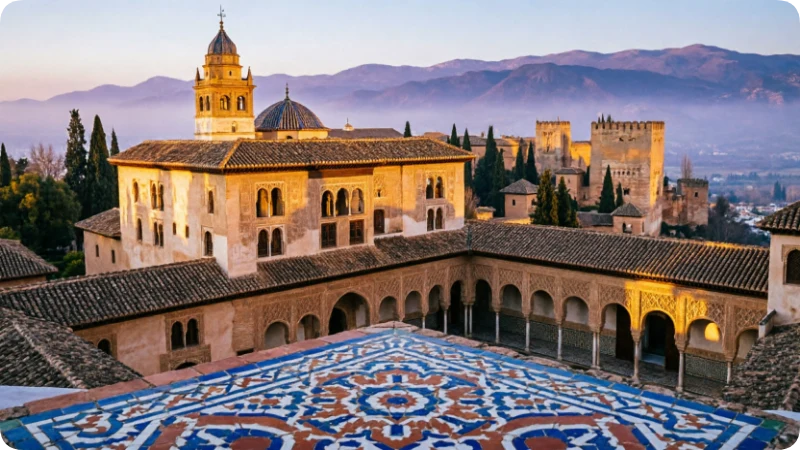
This is perhaps the most overlooked corner of Spanish surname history and also the most beautiful. For nearly 800 years, Islamic civilization flourished on the Iberian Peninsula. The Moors left behind architecture, mathematics, astronomy, poetry, and thousands of place names that became surnames when the Reconquista pushed south.
These names carry the sound of Al Andalus: rolling vowels, soft consonants, the geography of a lost world.
Almodovar Origin: Arabic al mudawwar the circular one, or the rounded place. Made famous globally by filmmaker Pedro Almodóvar. Vibe: Cinematic · Mysterious · Andalusian warmth Note: The double r spelling is the original Spanish rendering of the Arabic.
Alcazar Origin: Arabic al qasr the palace or fortress. Families who lived near or worked within a royal fortress often took this name. Vibe: Regal · Fortress energy · Deeply historical
Abenójar Origin: Arabic compound surname rare even in medieval Spain. Associated with a small municipality in Ciudad Real. Vibe: Ancient · Scholarly · Almost extinct
Aljarafe Origin: Arabic al sharaf the high place or elevated land. From the name of the fertile plateau west of Seville. Vibe: Earthy · Elevated · Poetic
Algaba Origin: Arabic al ghaba the forest or the thicket. A beautiful, nature rooted surname tied to the Sevillian landscape. Vibe: Wild · Natural · Quietly beautiful
Guadalupe Origin: Arabic Latin hybrid wadi al lubb (river of black pebbles) combined with Latin. More commonly known as a given name, but its use as a surname predates that association. Vibe: Sacred · Iconic · Dual natured
Maqueda Origin: Arabic maqaida the place of sitting or rest. A town name in Toledo that became a rare family surname. Vibe: Still · Contemplative · Rare
Why These Names Matter Now
There’s been a quiet cultural revival of Moorish origin Spanish surnames partly driven by genealogical research, partly by a broader cultural reckoning with Spain’s Islamic heritage. On TikTok and Instagram, content creators with Moorish origin Spanish surnames are exploring their Andalusian roots in ways their grandparents rarely could. These names aren’t just rare, they’re becoming points of pride.
Rare Spanish Surnames From the Basque Country
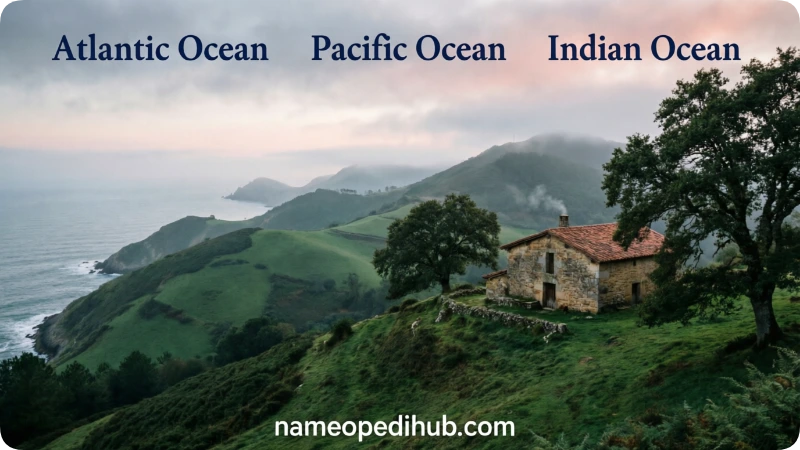
Basque surnames are in a category entirely their own. The Basque language Euskara is a language isolate: it shares no known ancestry with Spanish, French, Latin, or any other Indo European language. Basque surnames therefore sound completely unlike standard Spanish names, and they often carry meanings rooted in the Basque landscape: houses, hills, rivers, oaks, and stone.
They’re rare outside the Basque region because they simply didn’t translate culturally or linguistically into the broader Spanish naming world.
Etxeberria Origin: Euskara etxe (house) + berria (new). The new house. One of the more common Basque surnames, but extraordinarily rare outside the Basque Country. Vibe: Grounded · Ancient · Architectural
Larrazabal Origin: Euskara larra (pasture) + zabal (wide). The wide meadow or broad pasture. Vibe: Expansive · Pastoral · Unhurried
Aguirre Origin: Euskara agirre, meaning open space, clearing, or prominence. Carried by Spanish military figures and now relatively known in Latin America, but still rare as a pure Basque surname. Vibe: Open · Proud · Rugged
Goikoetxea Origin: Euskara goiko (upper) + etxea (house). The upper house or house on the hill. Vibe: Elevated · Structural · Quietly powerful
Iturriaga Origin: Euskara iturri (spring or fountain) + aga (place of). The place of the spring. Vibe: Flowing · Natural · Meditative
Mendiola Origin: Euskara mendi (mountain) + ola (place of work or forge). The mountain forge. Vibe: Elemental · Industrial · Strong
Zubizarreta Origin: Euskara zubi (bridge) + zarreta (old place). Made mildly famous by Spanish goalkeeper Andoni Zubizarreta still extraordinarily rare. Vibe: Sturdy · Architectural · Deeply regional
“Basque surnames don’t just name a family they name a location within a landscape that the family called home. They’re coordinates disguised as words.”
Rare Spanish Last Names From Galicia & the Celtic North
Northern Spain Galicia, Asturias, Cantabria has its own distinct cultural DNA, rooted not in Moorish influence but in Celtic pre Roman peoples, Roman settlement, and later Swabian and Visigothic Germanicteams. Galician surnames in particular have a misty, lyrical quality entirely different from the sharp consonants of Castile or the rolling vowels of Andalusia.
Pazos Origin: Galician Portuguese from pazo, a type of Galician manor house or noble rural estate. A surname that carries architectural elegance. Vibe: Manor house quiet · Celtic mist · Understated nobility
Quiroga Origin: From the municipality of Quiroga in Lugo, Galicia. A deeply regional name of uncertain pre Roman origin. Vibe: Ancient · Earthy · Literary (the Argentine writer Horacio Quiroga carried it to South America)
Loureiro Origin: Galician Portuguese the laurel tree grove. From loureiro, laurel. Poetic, botanical, beautiful. Vibe: Botanical · Verdant · Quietly romantic
Seixas Origin: Galician Portuguese from seixo, a type of smooth river stone or flint. Families who lived near stony riverbeds. Vibe: Elemental · Solid · Riverbed calm
Ameneiro Origin: Galician the alder tree or alder grove. One of the rarest Galician surnames, carried by tiny numbers of families. Vibe: Forest dark · Celtic · Almost mythological
Trasmonte Origin: Galician Spanish tras (beyond) + monte (mountain). The family from beyond the mountain. Geographically poetic. Vibe: Remote · Mysterious · Story rich
Varela Origin: Galician Portuguese from a small enclosure or stockade. Common in Galicia and Portugal, but genuinely rare in the broader Spanish speaking world. Vibe: Enclosed · Artisan · Warm
Rare Medieval Castilian Surnames You Almost Never Hear
These are the surnames of medieval Castile, the heart of the Spanish kingdom that drove the Reconquista, built the empire, and produced Cervantes. Many of these names are occupational or descriptive in origin, dating from the 11th–14th centuries when hereditary surnames first became widespread in Spain.
| Name | Meaning | Origin Type | Vibe |
| Ballestero | Crossbowman / maker of crossbows | Occupational | Warrior · Medieval |
| Escudero | Shield bearer / squire | Occupational | Chivalric · Noble |
| Montoya | Of the hills / from the mountain pass | Toponymic | Legendary (Princess Bride) · Rustic |
| Cisneros | Place of swans | Toponymic | Lyrical · Cardinal’s legacy |
| Velarde | Brave warrior (Visigothic compound) | Germanic | Heroic · Forgotten |
| Palomino | Little dove / young pigeon | Descriptive | Soft · Gentle · Unusual |
| Belmonte | Beautiful mountain | Toponymic | Romantic · Andalusian |
| Pedraza | Rocky place / stone ground | Toponymic | Solid · Rugged · Old Castile |
| Cepeda | Place of tree stumps or thickets | Toponymic | Rustic · Forgotten |
| Alvarado | White or bleached place | Toponymic | Colonial legacy · Strong |
The Squire and the Crossbowman
Escudero and Ballestero deserve special attention not just because they’re rare, but because they carry the entire social architecture of medieval Spanish life inside them. The escudero (squire, literally “shield bearer”) was the man who served the knight, aspiring to knighthood himself. The ballestero was the crossbowman, a specialized, respected military role that required years of training. These weren’t just jobs. They were identities. And the surnames they left behind are tiny windows into that world.
Rare Spanish Last Names by Aesthetic Vibe
Sometimes you don’t search for a name by meaning you search for a feeling. Here’s a curated breakdown of rare Spanish surnames by the emotional energy and aesthetic they carry.
Dark & Gothic Shadowed, Mysterious, Medieval
Names with weight and shadow. Perfect for fiction, character naming, or anyone drawn to the darker, more mysterious edges of Spanish history.
Cordobés · de la Sombra · Cisneros · Maqueda · Moret · Abenójar · Trasmonte · Alcazar
Romantic & Lyrical Soft, Flowing, Poetic
Names that sound like verses from a Lorca poem. They carry warmth, landscape, and an aching beauty.
Loureiro · Almodovar · Belmonte · Guadalupe · Fontecilla · Laverde · Palomino · Ameneiro
Noble & Ancestral Stately, Weighty, Heraldic
Names that carry the feeling of old stone walls and family crests. These names have gravitas.
Escudero · Velarde · de Cisneros · Montoya · Alvarado · Pazos · Aguirre · Larrazabal
Wild & Elemental Nature Rooted, Landscape Tied
Names drawn directly from the Spanish and Basque landscape mountains, rivers, forests, stones.
Iturriaga · Seixas · Loureiro · Algaba · Mendiola · Larrazabal · Goikoetxea · Trasmonte
Rare & Minimalist Short, Striking, Unforgettable
Names with very few syllables that carry extraordinary punch. They’re rare precisely because simplicity is hard to come by in Spanish surname history.
Llull · Moret · Valls · Pons · Tous · Rull · Mur · Gual
Rare Spanish Surnames in Pop Culture, Literature & History
Rare doesn’t always mean unknown. Some of these surnames became famous through a single extraordinary bearer which makes them feel both rare and legendary at the same time.
Montoya Perhaps the most beloved rare Spanish surname in global pop culture, thanks to Inigo Montoya in The Princess Bride. “My name is Inigo Montoya” may be the most famous surname introduction in cinema history. The actual surname is Castilian, meaning “of the hills,” and is genuinely uncommon outside its original Cantabrian region.
Almodóvar Pedro Almodóvar single handedly made this Moorish origin surname known worldwide. Before his films, it was a name attached to a small Andalusian town. Now it’s synonymous with cinematic brilliance, bold color, and emotional complexity.
Cisneros Cardinal Francisco Jiménez de Cisneros was one of the most powerful figures in early 16th century Spain, confessor to Queen Isabella, Grand Inquisitor, regent of Castile, and founder of the University of Alcalá. The surname comes from cisneros, a place of swans, which is perhaps the most beautiful contrast imaginable given the man’s ferocious political legacy.
Quiroga Horacio Quiroga, the Uruguayan short story writer often called the “Poe of the Río de la Plata,” carried this rare Galician surname to South American literary fame. His stories of the jungle and madness remain some of the most powerful in Latin American literature.
Velarde Pedro Velarde was the young artillery captain who became one of Spain’s greatest national heroes during the Dos de Mayo uprising against Napoleon in 1808. He died that day at age 31. His surname of Visigothic origin meaning brave warrior feels almost preordained.
How to Pronounce These Rare Spanish Surnames
Spanish pronunciation is blessedly consistent once you know the rules, you can pronounce almost any Spanish word correctly. But rare surnames, especially those from Basque, Galician, or Arabic roots, have their own quirks.
| Name | Pronunciation | Key Notes |
| Almodovar | al mo DOH var | Stress on the third syllable. The final “r” is gently rolled. |
| Etxeberria | etch eh BEH ree ah | “Etx” = “etch” in Basque. Four syllables. |
| Zubizarreta | zoo bee tha REH tah | “z” in Spanish = “th” sound in Spain. |
| Quiroga | kee ROH gah | Hard “qu” = “k” sound. Stress on the second syllable. |
| Loureiro | lou RAY roh | Galician “ou” = like “ow” in “low.” |
| Escudero | es koo DEH roh | Clear four syllables. Stress on third. |
| Ballestero | bah yeh STEH roh | Double “ll” = “y” sound in modern Spanish. |
| Larrazabal | lah rah tha BAHL | Basque name. “z” = “th” in Spanish pronunciation. |
Rare Spanish Last Names for Writers, Game Designers & World Builders
Spanish surnames, especially rare ones, are extraordinary raw material for fiction. They’re phonetically beautiful, semantically rich, and carry centuries of cultural context that does narrative work without exposition.
For Protagonists From Old Blood
A hero who carries the weight of family legacy needs a name that sounds like it remembers something. Try Velarde, Escudero, Montoya, or Pazos. These names imply ancestry. They whisper: there’s a story before this story.
For Mysterious & Morally Complex Characters
Maqueda (place of rest), Trasmonte (beyond the mountain), Abenójar (ancient Arabic compound) these names create immediate intrigue. The reader leans in. Where is this person from? What are they hiding?
For Nature Bound or Shamanic Characters
Basque and Galician surnames rooted in landscape are ideal here: Iturriaga (place of the spring), Ameneiro (alder grove), Seixas (river stones), Larrazabal (wide meadow). They feel elemental like the character grew from the land itself.
For Antagonists With Historical Gravity
Surnames with Inquisition era or conquest era associations carry natural dramatic tension: Cisneros, Alvarado, Alcazar. These names arrive in a story pre loaded with moral complexity.
“The rarest Spanish surnames are the ones where the name itself becomes a character before the person who carries it says a single word.”
Frequently Asked Questions
What is the rarest Spanish last name?
Truly measuring rarity is difficult without access to Spain’s National Statistics Institute data, but surnames like Ameneiro, Abenójar, Aljarafe, Trasmonte, and Cepeda are among those carried by extremely small numbers of people globally. Some Basque surnames like Larrazabal and Goikoetxea are also exceedingly rare outside the Basque Country. Sephardic Jewish surnames like Abravanel and Cresques may now be among the rarest of all, given the historical disruption of those communities.
Why do some Spanish last names start with “Al”?
The prefix Al in Spanish surnames is a direct inheritance from Arabic specifically from the Arabic definite article al meaning “the.” When Moorish place names and words were absorbed into Castilian Spanish during and after the Reconquista, the al prefix came with them. Alcazar (the palace), Almodovar (the circular place), Alfaro (the lighthouse/beacon) all of these begin with what was once simply “the” in Arabic.
Do Spanish people still use two last names?
Yes. Spain maintains the traditional system of two surnames (apellidos) the first from the father’s paternal line, the second from the mother’s paternal line. Since 1999, Spanish law allows parents to choose the order. This system means that rare surnames can survive even when a family line is small, because they appear as the second surname in countless combinations.
What are some rare Spanish last names for fictional characters?
For heroes: Velarde, Escudero, Montoya, Aguirre. complex or dark characters: Maqueda, Cisneros, Trasmonte, Alcazar. Nature tied characters: Iturriaga, Loureiro, Seixas, Ameneiro. For noble or ancestral characters: Pazos, de Cisneros, Alvarado, Belmonte.
Are Basque last names considered Spanish?
Politically and legally, yes Basque surnames belong to Spain (and France, in the northern Basque Country). But culturally and linguistically, Basque surnames come from Euskara, a language completely unrelated to Spanish. This is why Basque surnames like Etxeberria or Zubizarreta sound so unlike Castilian surnames. They’re Spanish in nationality, Basque in soul.
What happened to Moorish Spanish surnames after 1492?
After the fall of Granada in 1492 and the subsequent forced conversions and expulsions, most Moorish families who remained in Spain (the Moriscos) adopted Christian Spanish surnames. Many changed their names entirely to avoid persecution. Their original Arabic surnames mostly disappeared from the Spanish naming pool, though some survived as place names that later became family names. This is why Moorish origin Spanish surnames are so rare and so precious today.
Can I use a rare Spanish surname if I’m not Spanish?
For pen names, fictional characters, gaming handles, or creative use, absolutely there’s no cultural gatekeeping on surname aesthetics. Legal name changes, the rules vary by country. For genealogical purposes, rare Spanish surnames should only be claimed if you have documented heritage inventing an ancestry is both ethically problematic and usually easy to disprove in an age of DNA testing.
These Names Are Rare. That’s Exactly Why They Matter.
The most common Spanish surnames became common because of demographic luck the right families in the right places had the most children, survived the most plagues, and emigrated in the greatest numbers. That’s it. There’s no inherent superiority in García over Almodovar. There’s just arithmetic.
The rare names survived anyway. Against expulsions, extinctions, simplifications, misspellings, and centuries of pressure to become something more legible, more manageable, more common they held on.
And that, in itself, is a kind of story.
Whether you’re looking for one because it’s yours by blood, yours by creative right, or simply yours by fascination a rare Spanish surname is never just a word. It’s a small, stubborn, beautiful piece of survival.

I am Clara Bennett, a passionate Name Researcher and Content Writer at Nameopediahub.com . I share well-researched content about name meanings, origins, trends, and naming ideas to help readers discover unique and meaningful names from around the world. nameopediahub.com