There’s a quiet thrill in discovering that a name you’ve never heard before is actually over a thousand years old.
That’s what Old English names do they make you feel like you’ve found something that was buried just beneath the surface of history, waiting to be uncovered.
These are names that were spoken in mead halls and written in manuscripts before the Norman Conquest changed everything. Names that belonged to kings, warriors, saints, and ordinary people living in a world shaped by the land, the sea, the church, and the constant hum of fate.
Many of them disappeared after 1066, replaced by the French and Latin names the Normans brought with them. But they never really died. They survived in place names, in surnames, in literature, and in the memories of people who felt, instinctively, that something precious had been lost.
Right now, those names are coming back. Fantasy culture, dark academia aesthetics, the Norse and Anglo-Saxon revival in popular media, and a broader hunger for names with genuine roots all of these forces are converging to make Old English names feel not just acceptable but extraordinary.
Whether you’re looking for a baby name with real historical weight, a character name with authentic pre-Norman depth, or simply want to understand what people were called in Beowulf’s England you’re in the right place.
What Are Old English Names, Really?
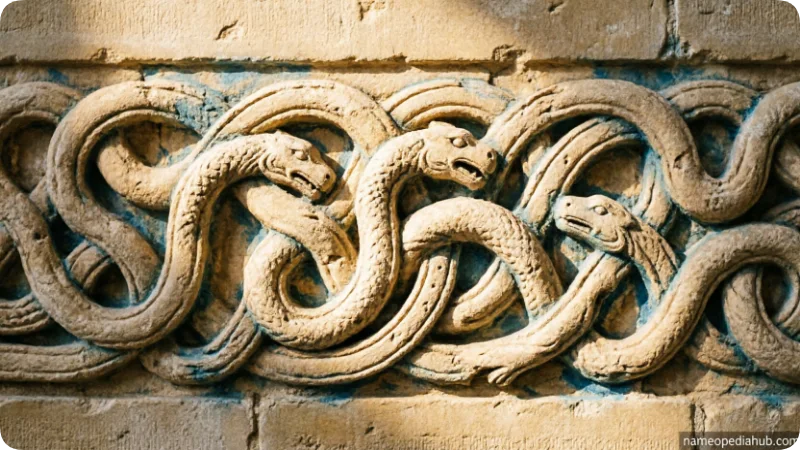
This question matters more than it might seem, because “Old English” gets used loosely in ways that can be confusing.
Old English also called Anglo-Saxon was the language spoken in England roughly from the 5th century CE to the Norman Conquest in 1066. It was brought to Britain by Germanic tribes, primarily the Angles, Saxons, and Jutes, who migrated from what is now Denmark and northern Germany. Old English is not simply old-fashioned modern English. It's a genuinely different language, as distant from contemporary English as modern German is.
Old English names work differently from names we’re used to. They are typically compound names two meaningful elements joined together. Æthel (noble) + wulf (wolf) = Æthelwulf. Ead (wealth/prosperity) + gar (spear) = Eadgar. Wulf (wolf) + stan (stone) = Wulfstan. This compositional logic gives every Old English name a transparent meaning you can literally read what someone’s parents hoped for their child.
The key name elements (called themes by naming historians) that appear most frequently include:
| Old English Element | Meaning | Example Names |
| Æthel / Ethel | Noble, excellent | Æthelstan, Æthelred, Ethelbert |
| Ead / Ed | Prosperity, wealth, fortune | Eadgar, Eadmund, Eadwine |
| Ælf / Elf | Elf, supernatural counsel | Ælfric, Ælfhere, Ælfwyn |
| Wulf | Wolf | Wulfric, Wulfstan, Æthelwulf |
| Beorn | Warrior, man, bear | Beornwulf, Beornhere |
| God | God | Godwin, Godwine, Godric |
| Ric / Rich | Power, ruler | Æthelric, Godric, Aldric |
| Stan | Stone | Dunstan, Æthelstan, Wulfstan |
| Wine | Friend | Eadwine, Leofwine, Godwine |
| Wyn | Joy, friend | Ælfwyn, Eadwyn, Godwyn |
Understanding these building blocks helps you read Old English names as what they actually are poems in miniature, wishes made into words.
Old English Boy Names From Kings to Warriors to Saints
The Anglo-Saxon naming tradition for men is rich with power, spirituality, and the specific worldview of a culture that valued both martial courage and the wisdom of counsel. These names aren’t museum pieces; many are genuinely striking to modern ears.
Aldric
Elements: Ald (old, experienced) + ric (power, ruler) meaning “old ruler” or “ruler of experience”
Aldric is one of the most wearable Old English names for modern use. The -ric ending gives it weight; the Ald- opening gives it a gravitas that shorter names lack. It was used in both Anglo-Saxon England and Continental Germanic cultures, which gives it broader historical grounding. Ald or Rick could serve as nicknames, though the full name is compact enough not to need one.
Vibe: Elder authority. A name that sounds like it has already seen things and isn’t easily surprised.
Dunstan
Elements: Dun (dark-colored, hill) + stan (stone) meaning “dark stone” or “hill stone”
Saint Dunstan of Canterbury is one of the great figures of early English Christianity Archbishop of Canterbury, advisor to kings, craftsman and musician, and a man whose influence shaped English church and state for generations after his death in 988. The name has a craggy, grounded quality Dun is the color of dark hills at dusk, stan is solid stone. Dun works as a nickname with a quiet, unusual charm.
Vibe: Anglo-Saxon sanctity. As solid as the stone it contains. Dark academia in the truest sense.
Godric
Elements: God (God) + ric (power, ruler) meaning “divine ruler” or “God’s power”
Godric was a widespread Anglo-Saxon name and became famous again through two very different figures: Saint Godric of Finchale, a 12th-century hermit and one of the earliest known composers of vernacular English songs, and Godric Gryffindor in the Harry Potter universe the co-founder of Hogwarts. That Harry Potter association has made it familiar to an entire generation while keeping it genuinely rare in real-world use.
Vibe: Divine power with an earthy grounding. Fantasy readers will know it; history lovers will love it deeper.
Leofric
Elements: Leof (beloved, dear) + ric (power, ruler) meaning “beloved ruler”
Leofric, Earl of Mercia, was one of the most powerful figures in 11th-century England and the husband of Lady Godiva, whose legendary naked ride through Coventry remains one of medieval England’s most vivid stories. The name has a warmth the fiercer Anglo-Saxon names lack, because leof means beloved. Leo is a completely natural nickname, which makes Leofric one of the most accessible Old English names for modern use.
Vibe: Beloved power. A name with warmth in its marrow. The softness of Leo hiding inside something much older.
Wulfric
Elements: Wulf (wolf) + ric (power, ruler) meaning “wolf power” or “ruling wolf”
The wolf was one of the central symbols of Anglo-Saxon culture fierce, loyal, intelligent, and an animal that operates in community. Wulf- names were among the most common in Anglo-Saxon England. Wulfric appears in the Anglo-Saxon Chronicle and in several saints’ lives. As a modern name, it’s bold and rare one of those names that fantasy culture has kept alive while history gave it its original weight.
Vibe: Fierce loyalty. The wolf not as threat but as guardian. For families who read Norse mythology and Anglo-Saxon poetry.
Æthelstan / Athelstan
Elements: Æthel (noble) + stan (stone) meaning “noble stone”
Æthelstan was the first King of a unified England he brought together the Anglo-Saxon kingdoms in the 10th century and is considered by many historians as England’s first true king. The letter Æ may make the original spelling seem bizarre to modern eyes, but the anglicized form, Athelstan, is remarkably accessible. Familiar in sound yet rich in historical depth, it bridges the gap between the modern world and England’s earliest history. Its profile has been further elevated by the success of the Viking-era drama The Last Kingdom, whose character Athelstan introduced the name to a new generation and demonstrated that even a name over a thousand years old can feel compellingly contemporary.. Ath or Stan work as nicknames.
Vibe: First king of England. Historical grandeur. The original English name.
Aldhelm
Elements: Ald (old, experienced) + helm (helmet, protection) meaning “old protection” or “experienced protector”
Saint Aldhelm of Malmesbury was a 7th-century scholar, bishop, and one of the earliest known writers of Old English poetry. The helm element meaning helmet was common in Anglo-Saxon names as a symbol of protection and leadership. Aldhelm is rarer than Dunstan or Godric, which makes it a genuine discovery for naming enthusiasts.
Vibe: Scholarly guardian. A name from the edge of literacy’s earliest days in England.
Eadric
Elements: Ead (prosperity, fortune, wealth) + ric (power, ruler) meaning “prosperous ruler”
Eadric the Wild was one of the last Anglo-Saxon resistance leaders after the Norman Conquest a figure of legend who fought back against William the Conqueror and was said to have never been entirely defeated. The name carries that stubborn, ungovernable quality. Ed is the natural nickname, making it accessible without losing the historical depth.
Vibe: The last holdout. The unconquered. A name that refused to surrender.
Godwin
Elements: God (God) + wine (friend) meaning “God’s friend” or “friend of God”
Godwin, Earl of Wessex, was the most powerful nobleman in 11th-century England father of King Harold, who died at Hastings in 1066. The name has extraordinary historical weight and a warmth the fiercer names lack, because wine means friend. It survived as a surname (Goodwin) but is almost entirely absent as a given name today, which makes it ripe for revival.
Vibe: Friendship and divine favor. The warm side of Anglo-Saxon power.
Old English Girl Names Rare, Luminous, Overlooked
Old English women’s names are genuinely underrepresented in most naming guides, which is a real loss they’re among the most beautiful and distinctive names in this entire tradition.
Ælfwyn / Elfwyn
Elements: Ælf (elf, supernatural being) + wyn (joy, friend) meaning “elf joy” or “friend of elves”
The ælf element in Old English names didn’t mean what the word “elf” means now a small creature with pointy ears. In Anglo-Saxon belief, the ælfe were powerful supernatural beings associated with beauty, magic, and otherworldly grace. Ælfwyn means something closer to “supernaturally beautiful friend” than anything diminutive.
The anglicized form Elfwyn is beautiful, unusual, and completely pronounceable. Elfie or Wyn work as nicknames. It’s the kind of name that fantasy culture should have discovered already and maybe it’s about to.
Vibe: Supernatural grace. The ethereal end of Old English naming. For families who love mythology and a little magic.
Eadwyn / Edwyn (feminine)
Elements: Ead (prosperity, wealth) + wyn (joy, friend) meaning “prosperous friend” or “joy of prosperity”
Most people encounter Edwin as a masculine name but Eadwyn and its variants were used for women in Anglo-Saxon England too. The feminine pronunciation carries gently, ending on the soft -wyn. It’s a name that’s both genuinely historical and sounds completely current sitting naturally beside modern names like Wren or Quinn while having a thousand years of history behind it.
Vibe: Joyful prosperity. Quietly lovely. Sounds current, is ancient.
Mildrith
Elements: Mild (gentle, kind) + thrith/thryth (strength) meaning “gentle strength”
Saint Mildrith (also Mildred, Mildthryth) was a 7th-century Anglo-Saxon abbess revered in Canterbury one of the most celebrated saints of early English Christianity. The full form Mildrith is rarer and more historical than the more familiar Mildred, and carries the original balance of its meaning gentleness as a form of strength, not an absence of it. Millie is the natural nickname bridge to modern use.
Vibe: Gentle power. The strength that doesn’t shout. A saint’s name with a warrior’s bones.
Sigeburh
Elements: Sige (victory) + burh (fortress, stronghold) meaning “victory fortress”
This is one for true enthusiasts of the Anglo-Saxon naming tradition Sigeburh is genuinely rare, genuinely historical, and carries a meaning of extraordinary strength. A victory fortress. The name of someone who cannot be taken. The -burh ending (giving us modern English -borough and -bury) appears throughout English place names, and hearing it in a personal name is a remarkable experience.
It requires confidence to use but for the right family, it’s extraordinary.
Vibe: Unassailable. The fortress that stands after every battle. A name for someone who will define her own terms.
Æthelflæd / Aethelflaed
Elements: Æthel (noble) + flæd (beauty, abundance) meaning “noble beauty”
Æthelflæd, Lady of the Mercians, is one of the greatest women in early medieval English history, a military and political leader who ruled Mercia after her husband’s death, built fortified towns, forged alliances, and fought Vikings with extraordinary success. She appears in The Last Kingdom as one of the series’ most compelling characters.
The modern anglicized form Aethelflaed is unusual to English eyes, but Fleda or Flae could serve as accessible nicknames. The historical figure’s story is so powerful that the name carries it naturally.
Vibe: The Lady of the Mercians. A name of genuine historical heroism. Extraordinary and rare.
Cwenburh
Elements: Cwen (queen, woman) + burh (fortress) meaning “queen’s fortress” or “woman’s stronghold”
Cwenburh appears in Anglo-Saxon records as a royal name carried by abbesses and noblewomen in early medieval England. The cwen element gives us modern English queen, which means the name literally means “queen’s stronghold.” The pronunciation (KWEN-burh) is accessible once heard. For families with deep interest in Anglo-Saxon history, it’s a genuine treasure.
Vibe: Royal and fierce. The queen’s own fortress. A name of complete, uncompromising female power.
Wulfwyn
Elements: Wulf (wolf) + wyn (joy, friend) meaning “wolf friend” or “joy of the wolf”
Wulfwyn combines the fierce wolf symbolism of Anglo-Saxon culture with the warmth of wyn (joy, friend), creating a name that feels both powerful and warm at once. It’s genuinely historical the name appears in Anglo-Saxon records and it has a sound that the fantasy and dark academia communities would love. Wynne is an easy, beautiful nickname.
Vibe: Wild warmth. The wolf who is also a friend. For names that contain contradictions beautifully.
Gender-Neutral Old English Names
Several Old English names sit comfortably across gender lines, or have enough flexibility in their history to work either way.
Leofwyn
Elements: Leof (beloved, dear) + wyn (joy, friend) meaning “beloved friend” or “dear joy”
Leofwyn appears in Anglo-Saxon records as both a masculine and feminine name the meanings suggest warmth regardless of gender. As a modern name it reads slightly more feminine (the -wyn ending), but it carries well for any gender. The full name is warm and unusual; Wyn or Leo work as nicknames.
Aldwyn
Elements: Ald (old, experienced) + wyn (joy, friend) meaning “old friend” or “experienced joy”
Aldwyn has the same warm -wyn ending as Leofwyn but the authoritative Ald- opening. It appears in both masculine and feminine Anglo-Saxon records and has a comfortable, settled feel, a name that suggests someone who has been here before. Wyn is the natural nickname.
Godwyn
Elements: God (God) + wyn (joy, friend) meaning “God’s friend”
Godwyn, a variant spelling of Godwin, has a slightly softer, more gender-neutral feel than the strictly masculine Godwin. The -wyn ending carries the name differently. It’s genuinely unusual and deeply rooted in early English history.
Old English Names and Modern Culture
One of the most interesting things happening in naming right now is how deeply Anglo-Saxon names have been absorbed into contemporary fantasy, gaming, and dark academia culture often without the people using them realizing the depth of their historical roots.
In television and film: The Last Kingdom (BBC/Netflix) and Vikings brought names like Athelstan, Uhtred, Aethelflaed, and Leofric to millions of viewers. The Lord of the Rings was explicitly influenced by Tolkien’s deep knowledge of Anglo-Saxon the Rohirrim language is essentially Old English, and names like Éowyn, Théoden, and Éomer are direct Old English coinages.
In gaming culture: Fantasy RPGs have long borrowed from the Anglo-Saxon naming tradition. Dark Souls, Dragon Age, Elder Scrolls all draw on this well. Players who build characters with names like Aldric or Wulfric are often independently rediscovering actual historical names.
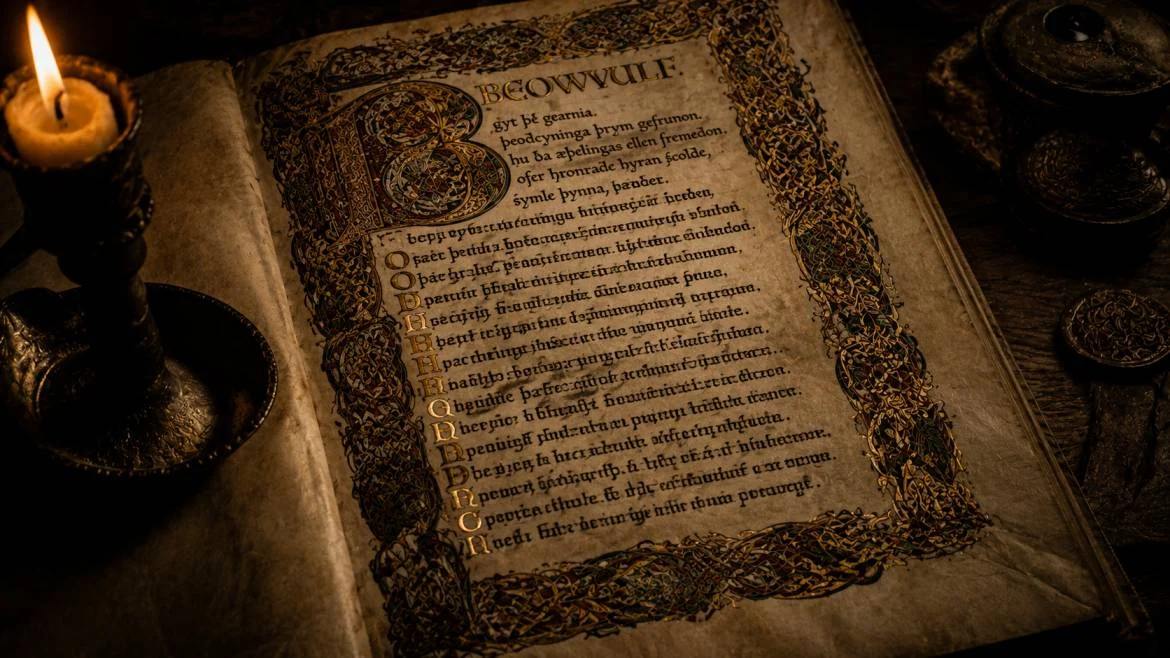
In TikTok and Pinterest aesthetics: The dark academia and Anglo-Saxon revival aesthetics mead halls, illuminated manuscripts, the intersection of warrior culture and scholarly tradition have found an enthusiastic Gen Z audience. Names like Dunstan, Godric, and Ælfwyn sit perfectly in this aesthetic world.
In Tolkien’s legacy: It’s impossible to discuss Old English names without acknowledging J.R.R. Tolkien, who was a professor of Anglo-Saxon at Oxford. His invented languages drew heavily on Old English phonology and naming conventions. If you love Tolkien’s naming style, you love Old English whether you knew it or not.
Old English Names by Aesthetic and Vibe
| Aesthetic | Names |
| Dark academia | Dunstan, Godric, Wulfric, Aldhelm, Sigeburh |
| Fantasy-adjacent | Wulfric, Ælfwyn, Godric, Aethelflaed, Leofwyn |
| Royal and historical | Æthelstan, Eadric, Godwin, Cwenburh, Aethelflaed |
| Soft and warm | Leofric, Leofwyn, Godwin, Aldwyn, Eadwyn |
| Fierce and powerful | Wulfric, Sigeburh, Aethelflaed, Cwenburh, Eadric |
| Scholarly / saintly | Dunstan, Aldhelm, Godric, Mildrith, Aldric |
| Nature and elements | Dunstan (dark stone), Clay-tone names, Wulfric |
| Modern wearable | Leofric (→Leo), Aldric, Godwin, Elfwyn, Aldwyn |
Pronunciation Guide for Common Old English Names
One of the main barriers to using Old English names is pronunciation particularly the unfamiliar characters and sound combinations. Here’s a practical guide:
| Name | Pronunciation | Notes |
| Æthelstan | ATH-el-stan | The Æ sounds like “ash” between ‘a’ and ‘e’ |
| Aethelflaed | ATH-el-flaed | Often simplified to “ETH-el-flayd” |
| Ælfwyn | ALF-win | The Æ again; very accessible once known |
| Wulfric | WULF-rik | Straightforward once you see it |
| Godric | GOD-rik | Familiar to Harry Potter readers |
| Leofric | LEE-oh-frik | The Leo opening helps enormously |
| Dunstan | DUN-stan | Completely accessible |
| Eadric | EAD-rik or ED-rik | Either pronunciation works |
| Sigeburh | SIG-eh-burh | The -burh sounds like modern “-burg” |
| Cwenburh | KWEN-burh | Cwen = Queen; -burh as above |
| Mildrith | MIL-drith | The -th is soft, like “with” |
| Wulfwyn | WULF-win | Strong and clear |
Sibling Set Ideas for Old English Names
Old English names have a strong internal coherence names from the same tradition share an aesthetic register that makes sibling sets feel intentional and rich.
| Sibling Set | Register |
| Aldric, Dunstan, and Leofric | Three wearable Old English boy names at different scales |
| Ælfwyn, Mildrith, and Wulfwyn | Three Old English girl names ethereal, saintly, fierce |
| Godric, Elfwyn, and Aldwyn | Mixed vibe power, grace, and warmth |
| Athelstan and Aethelflaed | The historic brother-sister pair from Anglo-Saxon royalty |
| Leofric, Wulfric, and Eadric | Three -ric names a royal Anglo-Saxon naming tradition |
Frequently Asked Questions
Many names in common use today have Old English roots, often in forms altered by centuries of use. Edward, Edmund, Alfred, Edgar, Edwin, and Oswald all derive from Old English compound names. Ethelbert, Godwin, and Aldric have survived more directly. The name Millie, now a popular standalone name, traces back through Mildred to the Old English Mildrith. Even modern names like Audrey (Æthelthryth) and Lesley have Old English ancestry.
What is the difference between Old English names and Viking names?
Old English names come from the Anglo-Saxon Germanic tradition that developed in England from the 5th to 11th centuries. Viking names belong to the Old Norse tradition, a Germanic language closely related to—but distinct from—Old English. The two naming cultures share many ancestral roots, and centuries of contact, particularly during the Danelaw period, led to considerable overlap in vocabulary and personal names. Elements such as wulf (“wolf”) can be found in both traditions.
Despite these similarities, Old English names possess a character all their own. They tend to draw on different compound elements and carry a distinctly English sense of rhythm and identity, while Old Norse names often feel sharper and more Scandinavian in tone. If you are drawn to names such as Bjorn, Sigrid, or Ragnar, you are looking at the Old Norse tradition. If names like Wulfric, Dunstan, or Godwin appeal to you, you are firmly in the world of Old English naming.
Are Old English names suitable for modern babies?
Absolutely with some practical considerations. . The character becomes a conversation starter, a small lesson in language and history carried into everyday life. At the same time, the growing popularity of fantasy literature, historical dramas such as The Last Kingdom, and the broader revival of Anglo-Saxon and medieval aesthetics have made these names feel surprisingly contemporary. For perhaps the first time in centuries, they are not merely historical curiosities but culturally relevant choices.
What Old English names mean “warrior” or “battle”?
Several Old English elements relate to war and battle. Beorn means warrior/bear. Gar means spear. Helm means helmet/protection. Sige means victory. Wig means war/battle. Names built from these include Beornwulf (warrior wolf), Sigebert (bright victory), Wigmund (battle protection), and Sigeburh (victory fortress). Wulfric (“wolf power”) and Æthelstan (“noble stone”) embody a quieter form of martial symbolism. Their meanings suggest not the chaos of battle itself, but the virtues that medieval societies prized in their leaders—courage, steadfastness, authority, and strength of character.
What are the most beautiful Old English names?
Beauty is personal, but names consistently admired for their sound and meaning include: Ælfwyn (elf joy supernatural grace), Leofric (beloved ruler warmth and power), Aethelflaed (noble beauty historical grandeur), Dunstan (dark stone craggy and saintly), Wulfwyn (wolf friend fierce warmth), and Aldric (old ruler experience and authority). For women’s names, the -wyn ending names (Leofwyn, Ælfwyn, Eadwyn, Wulfwyn) are particularly beautiful the element means joy or friend, and it gives every name it appears in a warmth that fiercer names lack.
Did Anglo-Saxons have surnames?
Not in the modern sense. Old English naming culture used single personal names the compound structure (two meaningful elements) served as a form of distinction. Some people were distinguished by their father’s name (patronymics), their occupation, or a characteristic (the Bald, the Wise). Family surnames as a fixed, inherited feature were introduced primarily after the Norman Conquest. This is why Old English names have such strong individual characters they were the whole identity.
The Names That Survived the Conquest
After 1066, the Norman Conquest systematically replaced Anglo-Saxon culture its language, its laws, its architecture, and its names. By the 13th century, the most common names in England were William, Robert, Richard, and John all Norman French or Latin imports. The rich tradition of Old English compound names was reduced to footnotes in manuscripts.
they survived. In place names: Dunstable, Wolverhampton, surnames: Goodwin, Aldridge, Wulfson. The names of saints whose feast days kept their memories alive. In Tolkien’s Oxford study, where a professor of Anglo-Saxon found in these names the seeds of an entire imagined world.
That something is depth. The quiet weight of a name that has endured for a thousand years, carrying its meaning intact across generations.

I am Olivia Hayes, a dedicated Name Researcher and Content Writer at NameopediaHub.com. I create engaging and well-researched content about name meanings, origins, trends, and unique naming ideas to help readers explore the fascinating world of names. nameopediahub.com